Showing posts with label spark. Show all posts

2018-01-29

Advanced Deanonymization through Strava

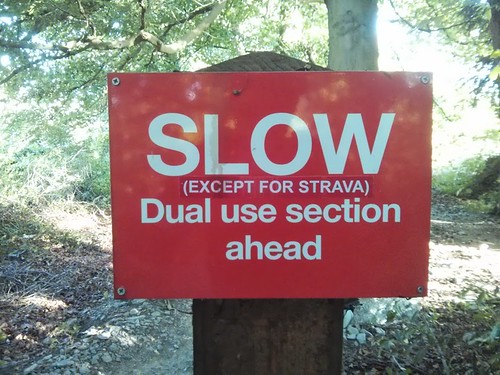
Slow Except for Strava

Strava is getting some bad press, because its heatmap can be used to infer the existence and floorplan of various US/UK military and govt sites.

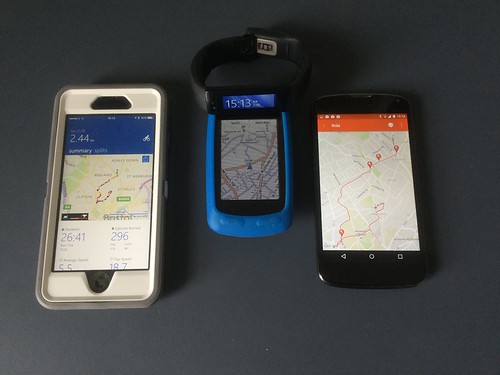
I covered this briefly in my Berlin Buzzwords 2016 Household INFOSEC talk , though not into that much detail about what's leaked, what a Garmin GPS tracker is vulnerable to (Not: classic XML entity/XInclude attacks, but a malicious site could serve up a subverted GPS map that told me the local motorway was safe to cycle on).
Untitled

Here are some things Strava may reveal

  • Whether you run, swim, ski or cycle.
  • If you tell it, what bicycles you have.
  • Who you go out on a run or ride with
  • When you are away from your house
  • Where you commute to, and when
  • Your fitness, and whether it is getting better or worse.
  • When you travel, what TZ, etc.

How to lock down your account?

I only try to defend against drive-by attacks, not nation states or indeed, anyone competent who knows who I am. For Strava then, my goal is: do not share information about where my bicycles are kept, nor those of my friends. I also like to not share too much about the bikes themselves. This all comes secondary to making sure that nobody follows me back from a ride over the Clifton Suspension Bridge (standard attack: wait at the suspension bridge, cycle after them. Standard defence: go through the clifton backroads, see if you are being followed). And I try to make sure all our bikes are locked up, doors locked etc. The last time one got stolen was due to a process failure there (unlocked door) and so the defences fell to some random drug addict rather than anyone using Strava. There's a moral there, but it's still good to lock down your data against tomorrow's Strava attacks, not just today's. My goal: keep my data secure enough to be safe from myself.
  1. I don't use my real name. You can use a single letter as a surname, an "!", or an emoji.
  2. And I've made sure that none of the people I ride regularly do so either
  3. I have a private area around my house, and those of friends.
  4. All my bikes have boring names "The Commuter", not something declaring value.
  5. I have managed fairly successfully to stay of the KoM charts, apart from this climb which I regret doing on so many levels.
For a long time I didn't actually turn the bike computer on until I'd got to the end of the road. I've got complacent there. Even though Strava strips the traces from the private zone when publishing, it does appear to declare the ride distance as the full distance. Given enough rides of mine, you can infer the radius of that privacy zone (fix? Have two overlapping circles?), and the distance on road from the cutoff points to where my house is (overlapping circles won't fix that). You'd need to strip out the start/stop points before uploading to strava (hard) or go back to only switching on recording once you were a randomish distance from your setoff point.

I haven't opted out of the Strava Heatmap, as I don't go anywhere that people care about. That said, there's always concerns in our local MTB groups that Strava leaks the non-official trails to those people who view stopping MTB riders as their duty. A source of controversy.

Now, how would I go for someone else's strava secrets?

You can assume that anyone who scores high in a mountain bike trail is going to have an MTB worth stealing, same for long road climbs.
  1. Ride IDs appear sequential, so you could harvest a days' worth and search.
  2. Join the same cycling club as my targets, see if they publish rides. Fixes: don't join open clubs, ever, and verify members of closed clubs.
  3. Strava KoM chart leakage. Even if you make your rides private, if you get on top 10 riders for that day or whatever, you become visible.
The fact that you can infer nation-state secrets is an interesting escalation. Currently it's the heatmap which is getting the bad press, which is part of the dataset that Strava offer commercially to councils. FWIW, the selection bias on Strava data (male roadies or mountain bikers) means that its not that good. If someone bought our local data, they'd infer that muddy wood trails with trees and rocks are what the city needs. Which is true, but it doesn't address the lack of any safe way to cross the city.

What is interesting about the heat map, and not picked up on yet, is that you can potentially deanonymize people from it.

First, find somewhere sensitive, like say, The UK Faslane Nuclear Submarine Base. Observe the hot areas, like how people run in rectangles in the middle.
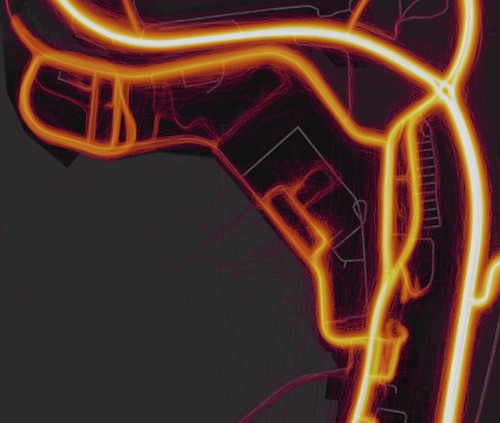
Faslane Heat Map
Now, go to MapMyRide and log in. Then head over to create a new route using the satellite data
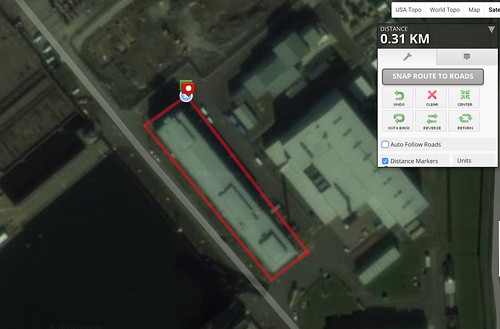
Created Route from the hotspot map

Download the GPX file. This contains the Lat/Long values of the route

If you try to upload it to strava, it'll reject it as there's no timing data. So add it, using some from any real GPX trace as a reference point. Doesn't have to be valid time, just make it slow enough that Strava doesn't think you are driving and tell you off for cheating.

Upload the file as a run, creating a new activity
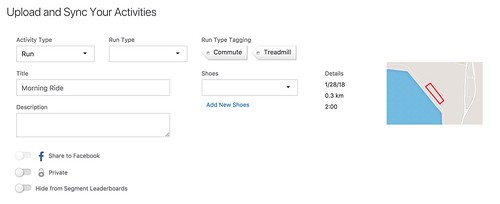
Faked run uploaded

The next step is the devious one. "Create a segment", and turn part/all of the route into a Strava segment.
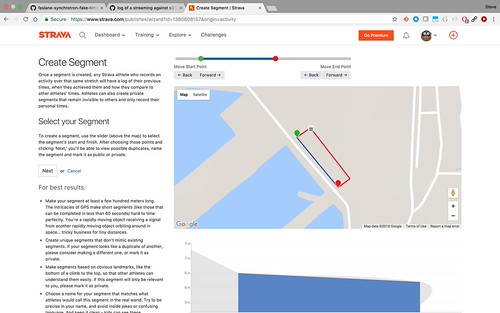
Creating a segment from the trace


Once strava has gone through its records, you'll be able to see the overall top 10  runners per gender/age group, when they ran, it who they ran with. And, if their profile isn't locked down enough: which other military bases they've been for runs on.
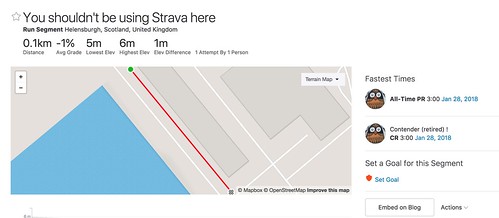
And now we wait to see who else did it


I have no idea who has done this run; whether there'll be any segment matches at all. If not, maybe the trace isn't close enough to the real world traces, everyone runs round clockwise, or, hopefully, people are smart enough to mark the area as a private. I'll leave strava up overnight to see what it shows, then delete the segment and run.

Finally, Berlin Buzzwords CFP is open, still offering to help with draft proposals. We can now say it's the place where Strava-based infosec issues were covered 2 years before it was more widely known.

Update 2018-01-29T21:13. I've removed the segment.
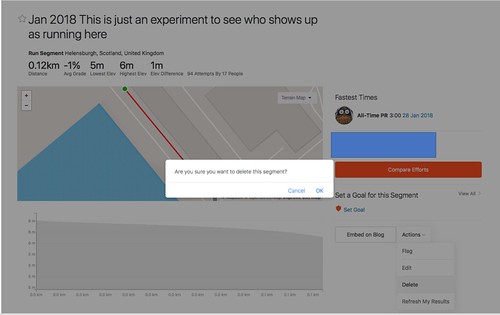
Removing Segment
Some people's names were appearing there, showing that, yes, you can bootstrap from a heatmap to identification of individual people who have run the same route.
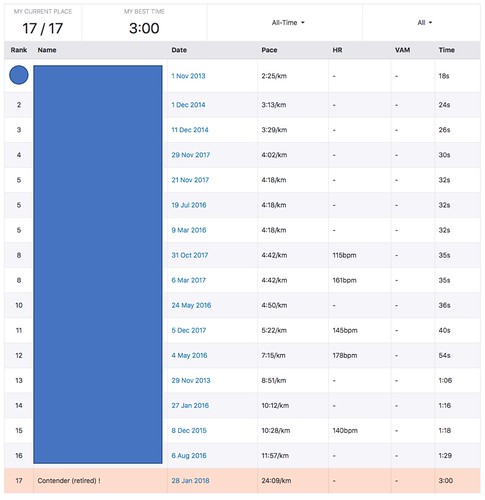
Segment top 17, as discovered
There's no need to blame the people here, so I've pulled the segment to preserve their anonymity. But as anyone else can do it, they should still mark all govt. locations where they train as private areas, so getting included from the heatmap and strava segments.

I don't know what Strava will do long term, but to stop it reoccurring, they'll need to have a way to mark an area as "private area for all users". Doable. Then go to various governments and say "Give us a list of secret sites you don't want us to cover". Which, unless the governments include random areas like mountain ranges in mid wales, is an interesting list of its own.

Update 2018-01-30T16:01 to clarify on marking routes private

  1. All ride/runs marked as "private" don't appear in the leader boards
  2. All ride/runs marked as "don't show in leader boards" don't appear
  3. Nor do any activities in a privacy zone make it onto a segment which starts/ends there
  4. But: "enhanced privacy mode" activities do. That is: even you can't see an individuals's activities off their profile, you can see the rides off the leaderboard.
Update 2018-01-31T00:30 Hacker News coverage

I have made Hacker news. Achievement Unlocked!

Apparently
This is neither advanced nor denanonymization (sic).
They basically pluck an interesting route from the hotmap (as per other people's recent discovery), pretend that they have also run/biked this route and Strava will show them names of others who run/biked the same way. That's clever, but that's not "advanced" by any means.
It's also not a deanonymization as there's really no option in Strava for public _anonymous_ sharing to begin with.

1. Thanks for pointing out the typo. Fixed.

2. It's bootstrapping from nominally anon heatmap data to identifying the participants of the route. And unless people use nicknames (only 2 of the 16 in the segment above) did, then you reveal your real name. And as it shows the entire route when you click through the timestamp, you get to see where they started/finished, who if anyone they went with, etc, etc. You may not their real name, but you know a lot about them.

3. "It''s not advanced". Actually, what Strava do behind the scenes is pretty advanced :). They determine which of all recorded routes they match that segment, within 24h. Presumably they have a record of the bounds of every ride, so first select all rides whose bounds completely enclose the segment. Then they have to go through all of them to see if there is a fraction of their trail which matches.. I presume you'd go with the start co-ord and scan the trace to see if any of the waypoints *or inferred bits of the line between two recorded waypoints* is in the range of that start marker. If so, carry on along the trace looking for the next waypoint of the segment; giving up if the distance travelled is >> greater than the expected distance. And they do that for all recorded events in past history. 

All I did was play around with a web UI showing photographs from orbiting cameras, adjacent to a map of the world with humanities' activities inferred by published traces of how phones, watches and bike computers calculated their positions from a set of atomic clocks, uploaded over the internet to a queue in Apache Kafka, processed for storage in AWS S3, whose consistency and throttling is the bane of my life and rendered via Apache Kafka, as covered in Strava Engineering. That is impressive work. Some of their analysis code is probably running through lines of code which I authored, and I'm glad to have contributed to something which is so useful, and, for the heatmap, beautiful to look at. 

So no, I wasn't the one doing the advanced engineering —but I respect those who did, and pleased to see the work of people I know being used in the app.

2017-11-22

subatomic

Untitled

I've just committed HADOOP-13786 Add S3A committer for zero-rename commits to S3 endpoints.. Contributed by Steve Loughran and Ryan Blue.

This is a serious and complex piece of work; I need to thank:
  1. Thomas Demoor and Ewan Higgs from WDC for their advice and testing. They understand the intricacies of the S3 protocol to the millimetre.
  2. Ryan Blue for his Staging-based S3 committer. The core algorithms and code will be in hadoop-aws come Hadoop 3.1.
  3. Colleagues for their support, including the illustrious Sanjay Radia, and Ram Venkatesh for letting me put so much time into this.
  4. Reviewers, especially Ryan Blue, Ewan Higgs, Mingliang Liu and extra especially Aaron Fabbri @ cloudera. It's a big piece of code to learn. First time a patch of mine has ever crossed the 1MB source barrier
I now understand a lot about commit protocols in Hadoop and Spark, including the history of interesting failures encountered, events which are reflected in the change logs of the relevant classes. Things you never knew about the Hadoop MapReduce commit protocol
  1. The two different algorithms, v1 and v2 have very different semantics about the atomicity of task and job commits, including when output becomes visible in the destination directory.
  2. Neither algorithm is atomic in both task and job commit.
  3. V1 is atomic in task commits, but O(files) in its non-atomic job commit. It can recover from any job failure without having rerun all succeeded tasks, but not from a failure in job commit.
  4. V2's job commit is a repeatable atomic O(1) operation, because it is a no-op. Task commits do the move/merge, which are O(file), make the output immediately visible, and as a consequence, mean that failure of a job means the output directory is in an unknown state.
  5. Both algorithms depend on the filesystem having consistent listings and Create/Update/Delete operations
  6. The routine to merge the output of a task to the destination is a real-world example of a co-recursive algorithm. These are so rare most developers don't even know the term for them -or have forgotten it.
  7. At-most-once execution is guaranteed by having the tasks and AM failing when they recognise that they are in trouble.
  8. The App Master refuses to commit a job if it hasn't had a heartbeat with the YARN Resource Manager within a specific time period. This stops it committing work if the network is partitioned and the AM/RM protocol fails...YARN may have considered the job dead and restarted it.
  9. tasks commit iff they get permission from the AM; thus they will not attempt to commit if the network partitions.
  10. if a task given permission to commit does not report a successful commit to the AM; the V1 algorithm can rerun the task; v2 must conclude its in an unknown state and abort the job.
  11. Spark can commit using the Hadoop FileOutputCommitter; its Parquet support has some "special" code which refuses to work if the committer is not a subclass of ParquetOutputCommitter
  12. . That is: it's special code makes it the hardest thing to bind to this: ORC, CSV, Avro: they all work out the box.
  13. It adds the ability for tasks to provide extra data to its job driver for use in job commit; this allows committers to explicitly pass commit information directly to the driver, rather than indirectly via the (consistent) filesystem.
  14. Everyone's code assumes that abort() completes in a bounded time, and does not ever throw that IOException its signature promises it can.
  15. There's lots of cruft in the MRv2 codebase to keep the MRv1 code alive, which would be really good to delete
This means I get to argue the semantics of commit algorithms with people, as I know what the runtimes "really do", rather than believed by everyone who has neither implemented part of it or stepped throught the code in a debugger.

If we had some TLA+ specifications of filesystems and object stores, we could perhaps write the algorithms as PlusCal examples, but that needs someone with the skills and the time. I'd have to find the time to learn TLA+ properly as well as specify everything, so it won't be me.

Returning to the committers, what do they do which is so special?

They upload task output to the final destination paths in the tasks, but don't make the uploads visible until the job is committed.

No renames, no copies, no job-commit-time merges, and no data visible until job commit. Tasks which fail/fail to commit do not have any adverse side effects on the destination directories.

First, read S3A Committers: Architecture and Implementation.

Then, if that seems interesting look at the source.

A key feature is that we've snuck in to FileOutputFormat a mechanism to allow you to provide different committers for different filesystem schemas.

Normal file output formats (i.e. not Parquet) will automatically get the committer for the target filesystems, which, for S3A, can be changed from the default FileOutputCommitter to an S3A-specific one. And any other object store which also offers delayed materialization of uploaded data can implement their own and run it alongside the S3A ones, which will be something to keep the Azure, GCS and openstack teams busy, perhaps.

For now though: users of Hadoop can use Amazon S3 (or compatible services) as the direct destination of Hadoop and Spark workloads without any overheads of copying the data, and the ability to support failure recovery and speculative execution. I'm happy with that as a good first step.

(photo: street vendors at the Kenya/Tanzania Border)

2017-09-09

Stocator: A High Performance Object Store Connector for Spark


Behind Picton Street

IBM have published a lovely paper on their Stocator 0-rename committer for Spark

Stocator is:
  1. An extended Swift client
  2. magic in their FS to redirect mkdir and file PUT/HEAD/GET calls under the normal MRv1 __temporary paths to new paths in the dest dir
  3. generating dest/part-0000 filenames using the attempt & task attempt ID to guarantee uniqueness and to ease cleanup: restarted jobs can delete the old attempts
  4. Commit performance comes from eliminating the COPY, which is O(data),
  5. And from tuning back the number of HTTP requests (probes for directories, mkdir 0 byte entries, deleting them)
  6. Failure recovery comes from explicit names of output files. (note, avoiding any saving of shuffle files, which this wouldn't work with...spark can do that in memory)
  7. They add summary data in the _SUCCESS file to list the files written & so work out what happened (though they don't actually use this data, instead relying on their swift service offering list consistency). (I've been doing something similar, primarily for testing & collection of statistics).

Page 10 has their benchmarks, all; of which are against an IBM storage system, not real amazon S3 with its different latencies and performance.

Table 5: Average run time


Read-Only 50GB
Read-Only 500GB
Teragen
Copy
Wordcount
Terasort
TPC-DS
Hadoop-Swift Base
37.80±0.48
393.10±0.92
624.60±4.00
622.10±13.52
244.10±17.72
681.90±6.10
101.50±1.50
S3a Base
33.30±0.42
254.80±4.00
699.50±8.40
705.10±8.50
193.50±1.80
746.00±7.20
104.50±2.20
Stocator
34.60±0.56
254.10±5.12
38.80±1.40
68.20±0.80
106.60±1.40
84.20±2.04
111.40±1.68
Hadoop-Swift Cv2
37.10±0.54
395.00±0.80
171.30±6.36
175.20±6.40
166.90±2.06
222.70±7.30
102.30±1.16
S3a Cv2
35.30±0.70
255.10±5.52
169.70±4.64
185.40±7.00
111.90±2.08
221.90±6.66
104.00±2.20
S3a Cv2 + FU
35.20±0.48
254.20±5.04
56.80±1.04
86.50±1.00
112.00±2.40
105.20±3.28
103.10±2.14

The S3a is the 2.7.x version, which has the stabilisation enough to be usable with Thomas Demoor's fast output stream (HADOOP-11183). That stream buffers in RAM & initiates the multipart upload once the block size threshold is reached. Provided you can upload data faster than you run out of RAM, it avoids the log waits at the end of close() calls, so has significant speedup. (The fast output stream has evolved into the S3ABlockOutput Stream (HADOOP-13560) which can buffer off heap and to HDD, and which will become the sole output stream once the great cruft cull of HADOOP-14738 goes in)

That means in the doc, "FU" == fast upload, == incremental upload & RAM storage. The default for S3A will become HDD storage, as unless you have a very fast pipe to a compatible S3 store, it's easy to overload the memory

Cv2 means MRv2 committer, the one which does  single rename operation on task commit (here the COPY), rather than one in task commit to promote that attempt, and then another in job commit to finalise the entire job. So only: one copy of every byte PUT, rather than 2, and the COPY calls can run in parallel, often off the critical path

 Table 6: Workload speedups when using Stocator


Read-Only 50GB
Read-Only 500GB
Teragen
Copy
Wordcount
Terasort
TPC-DS
Hadoop-Swift Base
x1.09
x1.55
x16.09
x9.12
x2.29
x8.10
x0.91
S3a Base
x0.96
x1.00
x18.03
x10.33
x1.82
x8.86
x0.94
Stocator
x1
x1
x1
x1
x1
x1
x1
Hadoop-Swift Cv2
x1.07
x1.55
x4.41
x2.57
x1.57
x2.64
x0.92
S3a Cv2
x1.02
x1.00
x4.37
x2.72
x1.05
x2.64
x0.93
S3a Cv2 + FU
x1.02
x1.00
x1.46
x1.27
x1.05
x1.25
x0.93


Their TCP-DS benchmarks show that stocator & swift is slower than TCP-DS Hadoop 2.7 S3a + Fast upload & MRv2 commit. Which means that (a) the Hadoop swift connector is pretty underperforming and (b) with fadvise=random and columnar data (ORC, Parquet) that speedup alone will give better numbers than swift & stocator. (Also shows how much the TCP-DS Benchmarks are IO heavy rather than output heavy the way the tera-x benchmarks are).

As the co-author of that original swift connector then, what the IBM paper is saying is "our zero rename commit just about compensates for the functional but utterly underperformant code Steve wrote in 2013 and gives us equivalent numbers to 2016 FS connectors by Steve and others, before they started the serious work on S3A speedup". Oh, and we used some of Steve's code to test it, removing the ASF headers.

Note that as the IBM endpoint is neither the classic python Openstack swift or Amazon's real S3, it won't exhibit the real issues those two have. Swift has the worst update inconsistency I've ever seen (i.e repeatable whenever I overwrote a large file with a smaller one), and aggressive throttling even of the DELETE calls in test teardown. AWS S3 has its own issues, not just in list inconsistency, but serious latency of HEAD/GET requests, as they always go through the S3 load balancers. That is, I would hope that IBM's storage offers significantly better numbers than you get over long-haul S3 connections. Although it'd be hard (impossible) to do a consistent test there, I 'd fear in-EC2 performance numbers to be actually worse than that measures.

I might post something faulting the paper, but maybe I'll should to do a benchmark of my new committer first. For now though, my critique of both the swift:// and s3a:// clients is as follows

Unless the storage services guarantees consistency of listing along with other operations, you can't use any of the MR commit algorithms to reliably commit work. So performance is moot. Here IBM do have a consistent store, so you can start to look at performance rather than just functionality. And as they note, committers which work with object store semantics are the way to do this: for operations like this you need the atomic operations of the store, not mocked operations in the client.

People who complain about the performance of using swift or s3a as a destination are blisfully unaware of the key issue: the risk of data loss due inconsistencies. Stocator solves both issues at once.

Anyway, means we should be planning a paper or two on our work too, maybe even start by doing something about random IO and object storage, as in "what can you do for and in columnar storage formats to make them work better in a world where a seek()+ read is potentially a new HTTP request."

(picture: parakeet behind Picton Street)