Showing posts with label security. Show all posts

2018-04-02

Computer Architecture and Software Security


Gobi's End
There's a new paper covering another speculative excuation-based attack on system secrets, BranchScope.

This one relies on the fact that for branch prediction to be effective, two bits are generally allocated to it, strongly & weakly taken and strongly & weakly not taken. The prediction state of a branch is based on the value in BranchHistoryTable[hash(address)]) and used to choose the speculation; if it was wrong it is moved from strongly -> weakly, and from weakly to opposite. Similarly, in weakly taken/non taken, if the prediction was taken, then its moves to strong.

Why so complex? Because we loop all the time
for (int i = 0; i < 1000) {
  doSomething(i);
}

Which probably gets translated into some assembly code (random CPU language I just made up)

    MOV  r1, 0
L1: CMP r1, 999
    JGT end
    JSR DoSomething
    ADD r1, 1
    JMP  L1
    ... continue

For 1000 times in that loop. the branch is taken, then once, at the end of the loop, it's not taken. The first time it's encountered, the CPU won't know what to do, it will just guess one of them and have a 50% chance of being wrong (see below). After that first iteration though it'll guess right, until the final test fails and the loop is exited. If that loop is itself called repeatedly, the fact that final iteration was mispredicted shouldn't lose the fact that the rest of the loop was predicted repeatedly. Hence, two bits.

As Hennessey and Patterson write in Computer Architecture, a quantitive approach (v4, p89), "the importance of branch prediction has increased". With deeper pipelines and the mismatch of CPU speed and memory, guessing right matters.

There isn't enough space in the Branch History Table to store 2 bits of history for every single branch in a system, so instead there'll be some smaller table and some function to take the full address and map it to an offset in that table. According to [Pan92], 4096 to 8192 entries is not that far off "an infinite" table. All that's left is the transform from program counter to BHT entry, which for 32 bit aligned opcodes something as simple as (PC >> 4) & 8191.

But the table is not infinite, there will be clashes: if something else is using the same entry in the BHT, then your branch may be predicted according to its history.

The new attack then simply works out the taken/not taken state of the target branch by seeing how your own code, whose addresses are designed to conflict, is predicted. That's all. And given that ability to predict branch direction, using it to reach conclusions about the state of the system.

Along with caching, branch prediction is the key way in which modern CPUs speed things up. And it does. But it's the clash between your entries in the cache and BHT and that of the target routine which is leaking information: how long it takes to read things, whether a branch is predicted or not. The very act of speeding up code is what leaks secrets.

"Modern" CPU Microarchitecture is in trouble here. We've put decades of work into caching, speculation, branch prediction, and now they all turn out to expose information. We built for speed, at what turns out to be the cost of secrecy. And in cloud environments where you cannot stop malicious code running on the same CPU, that means your secrets are not safe.

What can we do?

Maybe another microcode patch is possible: when switching from usermode to OS mode then the BHT is flushed. But that will cripple performancve in any loop which invokes system code in it. Or you somehow isolate BHT entries for different virtual memory spaces. Probably the best long term, but I'll leave it to others to work out how to implement.

What's worrying is the fact that new exploits are appearing so soon after Meltdown and Spectre. Security experts are now looking at all of the speculative execution bits of modern CPUs and thinking "that's interesting..."; more exploits are inevitable. And again, systems, especially cloud infrastructures, will be left struggling to catch up.

Cloud infrastructures are probably going to have to pin every VM to a dedicated CPU, with the hypervisor on its own part. That will limit secret exfiltration to the VM OS and anything else running on the core (the paper looks at the intel SGX "secure" zone and showed how it can be targeted). It'll be the smaller VMs at risk here, and potentially containerized stuff: you'd want all containers on a single core to be "yours".

What about single-core systems running a mix of trusted and trusted code (your phone, your web browser)? That's going to be hard. You can't dedicate one x86 core per browser tab.

Longer term: we're going to have to go through every bit of modern CPU architecture from a security perspective and say "is this safe?" And no doubt conclude, any speedup mechanism which relies on the history of previous work is insecure, if that history includes the actions taken (or speculatively taken) by sensitive applications.

Which is bad news for the majority of today's high end CPUs, especially those ones trying to keep the x86 instruction set alive. Those are the parts which have had so much effort invested into getting fractional improvements in caching, branch prediction, speculation and pipeline efficiency, and so have gotten incredibly complex. That's where the big vulnerabilities live.

This may push us back towards "underperformant but highly parallel" massivley multicore systems. Little/no speculation, isolating user space code into their own processes.

The most recent example of this is/was the Sun Niagara CPU line, which started off with a pool of early-90s era SPARC CPUs without fancy branch prediction...intead they had 4 set of state to cover the entire execution state of four different threads, scheduling work between them. Memory access? Stall that thread, schedule another. Branch? Don't predict, just wait and see, and add other thread opcodes to the pipeline.

There's still going to be security issues there (cache shared across the many cores, the actions of one thread can be implicitly observed by others in their execution times). And it seemly does speculate memory loads if there was no other work to schedule.

What's equally interesting is that the system is so power efficient. Speculative execution and branch prediction (a) requires lots of gates, renamed registeres, branch history tables and the like —every missed prediction or branch is energy wasted. Compare that to an Itanium part, where you almost need to phone up your electricity supplier for permission to power one up.

The Niagara 2 part pushed it ahead further to a level that is impressive to read. At the same time, you can see a great engineering team struggling with a fab process behind what Intel could do, Sun trying to fight the x86 line, and, well, losing.

Where are the parts now? Oracle's M8 CPU PDF touts its Out Of Order execution —speculative execution—, and data/instruction prefetch. I fear it's now got the same weaknesses of everything else. Apparently the java 8 streams API gets bonus speedup, which reminds me to post something criticising Java checked execution for making that API unusable for the throws IOException Hadoop codebase. As for the virtualization support, again, you'd need to think about pinning to a CPU. There's also that $L1-$L3 cache hit/miss problem: something speculating in one CPU could evict cached data observable to others, unless speculative memory fetches weren't a feature of the part.

They look nice-but-pricey servers; if you are paying the Oracle RDBMs tax the all-in-one price might mitigate that. Overall though, with a focus on many fast-but-dim parts over a smaller number of "throw Si at maximum single thread" architecture of recent x86 designs may provide opportunities for future designs to be more resistant to attacks related to speculative execution. I also think I'd like to see their performance numbers running Apache Spark 2.3 with one executor per thread and lots of RAM.

Update April 3 2018: I see within hours of this posting rumour start that Apple is looking at ARM parts for macbooks in 2020+. Not a coincidence! Actually it is, but because the ARM parts are simpler, they may be less exposed to specex-based attacks, even though Meltdown did affect those implementations which did speculative memory fetches. I think the Niagara architecture has more potential, but it probably works best in massively-multithreaded server side systems, not laptops where latency is the performance metric, not throughput.

[Photo: my 2008 Fizik Gobi saddle snapped one of its Titanium rails last week. Made it home in the rain, but a sign that after a decade, parts just wear out.]

2018-01-29

Advanced Deanonymization through Strava

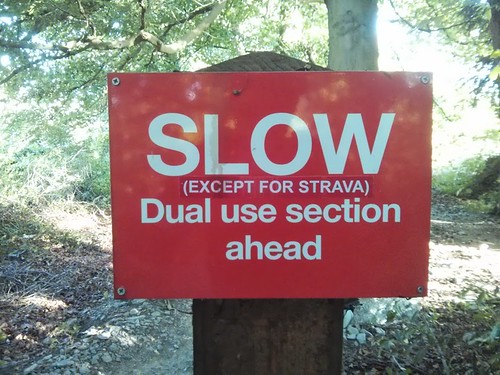
Slow Except for Strava

Strava is getting some bad press, because its heatmap can be used to infer the existence and floorplan of various US/UK military and govt sites.

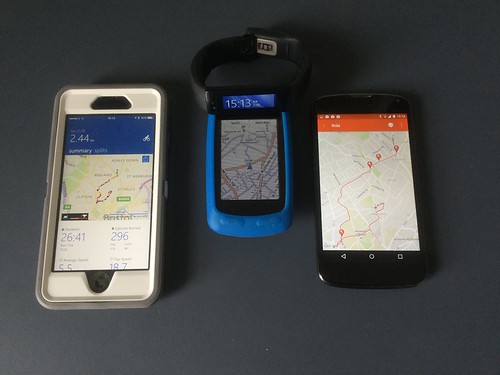
I covered this briefly in my Berlin Buzzwords 2016 Household INFOSEC talk , though not into that much detail about what's leaked, what a Garmin GPS tracker is vulnerable to (Not: classic XML entity/XInclude attacks, but a malicious site could serve up a subverted GPS map that told me the local motorway was safe to cycle on).
Untitled

Here are some things Strava may reveal

  • Whether you run, swim, ski or cycle.
  • If you tell it, what bicycles you have.
  • Who you go out on a run or ride with
  • When you are away from your house
  • Where you commute to, and when
  • Your fitness, and whether it is getting better or worse.
  • When you travel, what TZ, etc.

How to lock down your account?

I only try to defend against drive-by attacks, not nation states or indeed, anyone competent who knows who I am. For Strava then, my goal is: do not share information about where my bicycles are kept, nor those of my friends. I also like to not share too much about the bikes themselves. This all comes secondary to making sure that nobody follows me back from a ride over the Clifton Suspension Bridge (standard attack: wait at the suspension bridge, cycle after them. Standard defence: go through the clifton backroads, see if you are being followed). And I try to make sure all our bikes are locked up, doors locked etc. The last time one got stolen was due to a process failure there (unlocked door) and so the defences fell to some random drug addict rather than anyone using Strava. There's a moral there, but it's still good to lock down your data against tomorrow's Strava attacks, not just today's. My goal: keep my data secure enough to be safe from myself.
  1. I don't use my real name. You can use a single letter as a surname, an "!", or an emoji.
  2. And I've made sure that none of the people I ride regularly do so either
  3. I have a private area around my house, and those of friends.
  4. All my bikes have boring names "The Commuter", not something declaring value.
  5. I have managed fairly successfully to stay of the KoM charts, apart from this climb which I regret doing on so many levels.
For a long time I didn't actually turn the bike computer on until I'd got to the end of the road. I've got complacent there. Even though Strava strips the traces from the private zone when publishing, it does appear to declare the ride distance as the full distance. Given enough rides of mine, you can infer the radius of that privacy zone (fix? Have two overlapping circles?), and the distance on road from the cutoff points to where my house is (overlapping circles won't fix that). You'd need to strip out the start/stop points before uploading to strava (hard) or go back to only switching on recording once you were a randomish distance from your setoff point.

I haven't opted out of the Strava Heatmap, as I don't go anywhere that people care about. That said, there's always concerns in our local MTB groups that Strava leaks the non-official trails to those people who view stopping MTB riders as their duty. A source of controversy.

Now, how would I go for someone else's strava secrets?

You can assume that anyone who scores high in a mountain bike trail is going to have an MTB worth stealing, same for long road climbs.
  1. Ride IDs appear sequential, so you could harvest a days' worth and search.
  2. Join the same cycling club as my targets, see if they publish rides. Fixes: don't join open clubs, ever, and verify members of closed clubs.
  3. Strava KoM chart leakage. Even if you make your rides private, if you get on top 10 riders for that day or whatever, you become visible.
The fact that you can infer nation-state secrets is an interesting escalation. Currently it's the heatmap which is getting the bad press, which is part of the dataset that Strava offer commercially to councils. FWIW, the selection bias on Strava data (male roadies or mountain bikers) means that its not that good. If someone bought our local data, they'd infer that muddy wood trails with trees and rocks are what the city needs. Which is true, but it doesn't address the lack of any safe way to cross the city.

What is interesting about the heat map, and not picked up on yet, is that you can potentially deanonymize people from it.

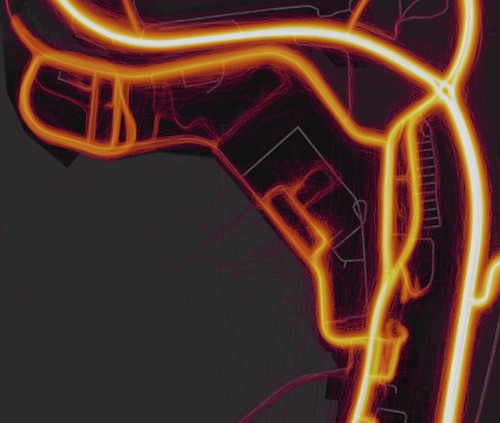
First, find somewhere sensitive, like say, The UK Faslane Nuclear Submarine Base. Observe the hot areas, like how people run in rectangles in the middle.
Faslane Heat Map
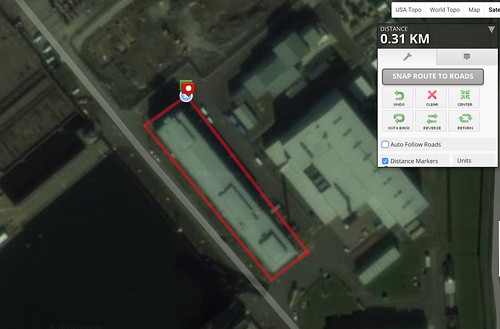
Now, go to MapMyRide and log in. Then head over to create a new route using the satellite data
Created Route from the hotspot map

Download the GPX file. This contains the Lat/Long values of the route

If you try to upload it to strava, it'll reject it as there's no timing data. So add it, using some from any real GPX trace as a reference point. Doesn't have to be valid time, just make it slow enough that Strava doesn't think you are driving and tell you off for cheating.

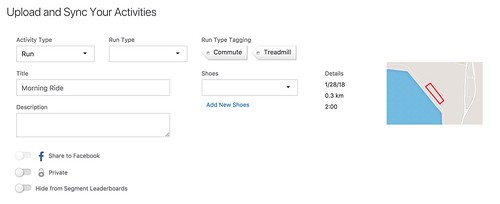
Upload the file as a run, creating a new activity
Faked run uploaded

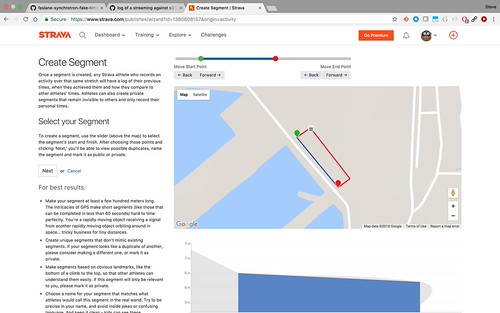
The next step is the devious one. "Create a segment", and turn part/all of the route into a Strava segment.
Creating a segment from the trace


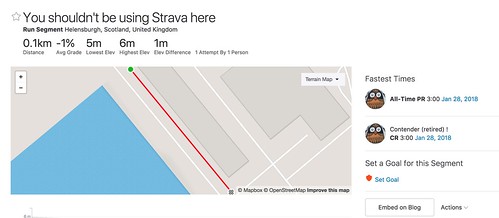
Once strava has gone through its records, you'll be able to see the overall top 10  runners per gender/age group, when they ran, it who they ran with. And, if their profile isn't locked down enough: which other military bases they've been for runs on.

And now we wait to see who else did it


I have no idea who has done this run; whether there'll be any segment matches at all. If not, maybe the trace isn't close enough to the real world traces, everyone runs round clockwise, or, hopefully, people are smart enough to mark the area as a private. I'll leave strava up overnight to see what it shows, then delete the segment and run.

Finally, Berlin Buzzwords CFP is open, still offering to help with draft proposals. We can now say it's the place where Strava-based infosec issues were covered 2 years before it was more widely known.

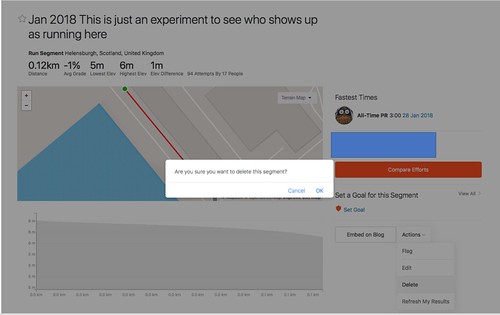
Update 2018-01-29T21:13. I've removed the segment.

Removing Segment
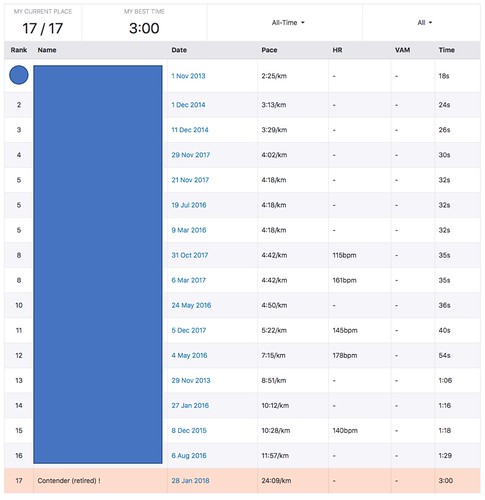
Some people's names were appearing there, showing that, yes, you can bootstrap from a heatmap to identification of individual people who have run the same route.
Segment top 17, as discovered
There's no need to blame the people here, so I've pulled the segment to preserve their anonymity. But as anyone else can do it, they should still mark all govt. locations where they train as private areas, so getting included from the heatmap and strava segments.

I don't know what Strava will do long term, but to stop it reoccurring, they'll need to have a way to mark an area as "private area for all users". Doable. Then go to various governments and say "Give us a list of secret sites you don't want us to cover". Which, unless the governments include random areas like mountain ranges in mid wales, is an interesting list of its own.

Update 2018-01-30T16:01 to clarify on marking routes private

  1. All ride/runs marked as "private" don't appear in the leader boards
  2. All ride/runs marked as "don't show in leader boards" don't appear
  3. Nor do any activities in a privacy zone make it onto a segment which starts/ends there
  4. But: "enhanced privacy mode" activities do. That is: even you can't see an individuals's activities off their profile, you can see the rides off the leaderboard.
Update 2018-01-31T00:30 Hacker News coverage

I have made Hacker news. Achievement Unlocked!

Apparently
This is neither advanced nor denanonymization (sic).
They basically pluck an interesting route from the hotmap (as per other people's recent discovery), pretend that they have also run/biked this route and Strava will show them names of others who run/biked the same way. That's clever, but that's not "advanced" by any means.
It's also not a deanonymization as there's really no option in Strava for public _anonymous_ sharing to begin with.

1. Thanks for pointing out the typo. Fixed.

2. It's bootstrapping from nominally anon heatmap data to identifying the participants of the route. And unless people use nicknames (only 2 of the 16 in the segment above) did, then you reveal your real name. And as it shows the entire route when you click through the timestamp, you get to see where they started/finished, who if anyone they went with, etc, etc. You may not their real name, but you know a lot about them.

3. "It''s not advanced". Actually, what Strava do behind the scenes is pretty advanced :). They determine which of all recorded routes they match that segment, within 24h. Presumably they have a record of the bounds of every ride, so first select all rides whose bounds completely enclose the segment. Then they have to go through all of them to see if there is a fraction of their trail which matches.. I presume you'd go with the start co-ord and scan the trace to see if any of the waypoints *or inferred bits of the line between two recorded waypoints* is in the range of that start marker. If so, carry on along the trace looking for the next waypoint of the segment; giving up if the distance travelled is >> greater than the expected distance. And they do that for all recorded events in past history. 

All I did was play around with a web UI showing photographs from orbiting cameras, adjacent to a map of the world with humanities' activities inferred by published traces of how phones, watches and bike computers calculated their positions from a set of atomic clocks, uploaded over the internet to a queue in Apache Kafka, processed for storage in AWS S3, whose consistency and throttling is the bane of my life and rendered via Apache Kafka, as covered in Strava Engineering. That is impressive work. Some of their analysis code is probably running through lines of code which I authored, and I'm glad to have contributed to something which is so useful, and, for the heatmap, beautiful to look at. 

So no, I wasn't the one doing the advanced engineering —but I respect those who did, and pleased to see the work of people I know being used in the app.

2018-01-04

Speculation


Speculative execution has been intel's strategy for keeping the x86 architecture alive since the P6/Pentium Pro part shipped in '95.

I remember coding explicitly for the P6 in a project in 1997; HPLabs was working with HP's IC Division to build their first CMOS-camera IC, which was an interesting problem. Suddenly your IC design needs to worry about light, aligning the optical colour filter with the sensors, making sure it all worked.

Eyeris

I ended up writing the code to capture the raw data at full frame rate, streaming to HDD, with an option to alternatively render it with/without the colour filtering (algorithms from another bit HPL team). Which means I get to nod knowingly when people complain about "raw" data. Yes, it's different for every device precisely because its raw.

The data rates of the VGA-resolution sensor via the PCI boards used to pull this off meant that a both cores of a multiprocessor P6 box were needed. It was the first time I'd ever had a dual socket system, but both sockets were full with the 150MHz parts and with careful work we could get away with the "full link rate" data capture which was a core part of the qualification process. It's not enough to self test the chips any more see, you need to look at the pictures.

Without too many crises, everything came together, which is why I have a framed but slightly skewed IC part to hand. And it's why I have memories of writing multithreaded windows C++ code with some of the core logic in x86 assembler. I also have memories of ripping out that ASM code as it turned out that it was broken, doing it as C pointer code and having it be just as fast. That's because: C code compiled to x86 by a good compiler, executed on a great CPU, is at least performant as hand-written x86 code by someone who isn't any good at assembler, and can be made to be correct more easily by the selfsame developer.

150 MHz may be a number people laugh at today, but the CPU:RAM clock ratios weren't as bad as they are today: cache misses are less expensive in terms of pipeline stalls, and those parts were fast. Why? Speculative and out of order execution, amongst other things
  1. The P6 could provisionally guess which way a branch was going to go, speculatively executing that path until it became clear whether or not the guess was correct -and then commit/abort that speculative code path.
  2. It uses a branch predictor to make that guess on the direction a branch was taken, based on the history of previous attempts, and a default option (FWIW, this is why I tend to place the most likely outcome first in my if() statements; tradition and superstition).
  3. It could execute operations out of order. That is, it's predecessor, the P5, was the last time mainstream intel desktop/server parts executed x86 code in the order the compiler generated them, or the human wrote them.
  4. register renaming meant that even though the parts had a limited set of registers, those OOO operations could reuse the same EAX, EBX, ECX registers without problems.
  5. It had caching to deal with the speed mismatch between that 150 MHz CPU & RAM.
  6. It supported dual CPU desktops, and I believe quad-CPU servers too. They'd be called "dual core" and "quad core" these days and looked down at.

Being the first multicore system I'd ever used, it was a learning experience. First was learning how too much windows NT4 code was still not stable in such a world. NTFS crashes with all all volumes corrupted? check. GDI rendering triggering kernel crash? check. And on a 4-core system I got hold of, everything crashed more often. Lesson: if you want a thread safe OS, give your kernel developers as many cores as you can.

OOO forced me to learn about the x86 memory model itself: barrier opcodes, when things could get reordered and when they wouldn't. Summary: don't try and be clever about synchronization, as your assumptions are invalid.

Speculation is always an unsatisfactory solution though. Every mis-speculation is lost cycles. And on a phone or laptop, that's wasted energy as much as time. And failed reads could fill up the cache with things you didn't want. I've tried to remember if I ever tried to use speculation to preload stuff if present, but doubt it. The CMOV command was a non-branching conditional assignment which was better, even if you had to hand code it.  The PIII/SSE added the PREFETCH opcode so you could a non-faulting hinted prefetch which you could stick into your non-branching code, but that was a niche opcode for people writing games/media codecs &c. And as Linus points out, what was clever for one CPU model turns out to be a stupid idea a generation later. (arguably, that applies to Itanium/IA-64, though as it didn't speculate, it doesn't suffer from the Spectre & Meltdown attacks).

Speculation, then: a wonderful use of transistors to compensate for how we developers write so many if() statements in our code. Wonderful, it kept the x86 line alive and so helped Intel deliver shareholder value and keep the RISC CPU out of the desktop, workstation and server businesses. Terrible because :"transistors" is another word for "CPU die area" with its yield equations and opportunity cost, and also for "wasted energy on failed speculations". If we wrote code which had fewer branches in it, and that got compiled down to CMOV opcodes, life would be better. But we have so many layers of indirection these days; so many indirect references to resolve before those memory accesses. Things are probably getting worse now, not better.

This week's speculation-side-channel attacks are fascinating then. These are very much architectural issues about speculation and branch prediction in general, rather than implementation details. Any CPU manufacturer whose parts do speculative execution has to be worried here, even if there's no evidence that your shipping parts aren't vulnerable to the current set of attacks. The whole point about speculation is to speed up operation based on the state of data held in registers or memory, so the time-to-execute is always going to be a side-channel providing information about the data used to make a branch.


The fact that you can get at kernel memory, even from code running under a hypervisor, means, well, a lot. It means that VMs running in cloud infrastructure could get at the data of the host OS and/or those of other VMs running on the same host (those S3 SSE-C keys you passed up to your VM? 0wned, along with your current set of IAM role credentials). It potentially means that someone else's code could be playing games with branch prediction to determine what codepaths your code is taking. Which, in public cloud infrastructure is pretty serious, as the only way to stop people running their code alongside yours is currently to pay for the top of the line VMs and hope they get a dedicated part. I'm not even sure that dedicated cores in a multicore CPU are sufficient isolation, not for anything related to cache-side-channel attacks (they should be good for branch prediction, I think, if the attacker can't manipulate the branch predictor of the other cores).

I can imagine the emails between cloud providers and CPU vendors being fairly strained, with the OEM/ODM teams on the CC: list. Even if the patches being rolled out mitigate things, if the slowdown on switching to kernelspace is as expensive as hinted, then that slows down applications, which means that the cost of running the same job in-cloud just got more expensive. Big cloud customers will be talking to their infrastructure suppliers on this, and then negotiating discounts for the extra CPU hours, which is a discount the cloud providers will expected to recover when they next buy servers. I feel as sorry for the cloud CPU account teams as I do for the x86 architecture group.

Meanwhile, there's an interesting set of interview questions you could ask developers on this topic.
  1. What does the generated java assembly for the Ival++ on a java long look like?
  2. What if the long is marked as volatile?
  3. What does the generated x86 assembler for a Java Optional<AtomicLong> opt.map(AtomicLong::addAndGet(1)) look like?
  4. What guarantees do you get about reordering?
  5. How would you write code which attempted to defend against speculation timing attacks?

I don't have the confidence to answer 1-4 myself, but I could at least go into detail about what I believed to be the case for 1-3; for #4 I should do some revision.

As for #5, defending. I would love to see what others suggest. Conditional CMOV ops could help against branch-prediction attacks, by eliminating the branches. However, searching for references to CMOV and the JDK turns up some issues which imply that branch prediction can sometimes be faster...", including "JDK-8039104. Don't use Math.min/max intrinsic on x86" it may be that even CMOV gets speculated on; with the CPU prefetching what is moved and keeping the write uncommitted until the state of the condition is known.

I suspect that the next edition of Hennessy and Patterson, "Computer Architecture, a Quantitative Approach" will be covering this topic.I shall look forward to with even greater anticipation than I have had for all the previous, beloved, versions.

As for all those people out there panicking about this, worrying if their nearly-new laptop is utterly exposed? You are running with Flash enabled on a laptop you use in cafe wifis without a VPN and with the same password, "k1tten",  you use for gmail and paypal. You have other issues.

2017-02-21

Why HTTPS is so essential, and auto-updating apps so dangerous

I'm building up two laptops right now. One, a work one to replace the four year old laptop which died. The other, a mid 2009 macbook pro which I've refurbed with an SSD and clean built up.

As I do this, I'm going through every single thing I'm installing to make sure I do somewhat trust it. That's me ignoring homebrew and where it pulls stuff from when I type something like "brew install calc". What I am doing is checking the provenance of everything else I pull down: validating any SHA-256 hashes they declare; making sure they come off HTTPS URLs, etc. The foundational stuff.

We have to recognise that serving software up over HTTP is something to be phasing out, and, if it is done, for the SHA-256 checksum to be published over HTTPS, or,  even better, for the checksum to be signed by a GPG key, after which it can be served anywhere. while OSX supports signed DMG files since OS/X El Capitan, and unless you expect the disk image to be signed, you aren't going to notice when you pick up an unsigned malware variant.

It's too easy for an open wifi station to redirect HTTP connections to somewhere malicious, and we all roam far too much. I realised while I was travelling, that all it would take to get lots of ASF developers on your malicious base station is simply to bring it up in the hotel foyer or in a quiet part of the conference area, giving it the name of the hotel or conference respectively. We conference-goers don't have a way to authenticate these wifi networks.

Anyway, most binaries I am downloading and installing are coming off HTTPS, which is reassuring.

One that doesn't is virtualbox: Oracle are still serving these up over HTTP. They do at least serve up the checksums over HTTP, but they don't do much in highlighting how much checking matters. No "to ensure that these binaries haven't been replaced by malicious one anywhere between your laptop and us, you MUST verify the checksums. No, it's just a mild hint, " You might want to compare the SHA256 checksums or the MD5 checksums to verify the integrity of downloaded packages".

Not HTTPS then, but with the artifacts something whose checksum I can validate from HTTPS. These are on the dev box, happily.

But here's something that I've just installed on the older, household laptop, "dogbert": Garmin Express. This is little app which looks at the data in a USB mounted Garmin bike computer, grabs the latest activities and updates them to Garmin's cloud infrastructure, where they make their way to Strava, somehow. Oh, and pushes firmware updates the other direction.

The Garmin Express application is downloaded over HTTP, no MD5, SHA1 or anything else. And while the app itself is signed, OSX can and will run unsigned apps if the permissions are set. I have to make sure that the "allow from anywhere" option is not set in the security panel before running any installer.

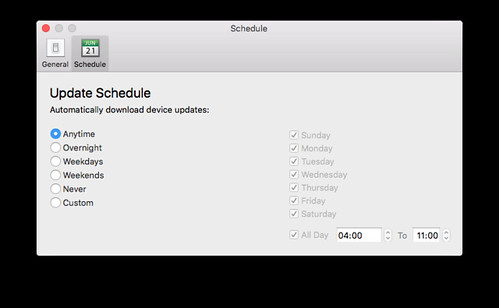
Here's the best bit though: that application does auto updates, any time, anywhere.
Garmin Express D/Ls from HTTP; autoupdate by default
Which means that little app, set to automatically run on boot, is out there checking for notifications of an updated application, then downloading it. It doesn't install it, but it will say "here's an update" and launch the installer.

Could I use this to get something malicious onto a machine? Maybe. I'd have to see if the probes for updates were on HTTP vs HTTPS, and if HTTP, what the payload was. If it was HTTPS, well, you are owned by whoever has their CAs installed on your system. That's way out of scope. But if HTTP is used, then getting the Garmin app to install an unsigned artifact looks straightforward. In fact, even if the update protocol is over HTTPS, given the artifact names of the updates can be determined, you could just serve up malicious copies all the time and hope that someone picks it up That's less aggressive through, and harder to guarantee any success from subverted base stations at a conference.

Rather than go to the effort of wireshark, we can play with lsof to see what network connections are set up on process launch

# lsof -i -n -P | grep -i garmin
Garmin 9966 12u 0x5ccb80e39679382b 192.168.1.18:55235->40.114.241.141:443
Garmin 9966 16u 0x5ccb80e39679382b 192.168.1.18:55235->40.114.241.141:443
Garmin 9967 10u 0x5ccb80e396b4a82b 192.168.1.18:55233->2.17.221.5:443
Garmin 9967 13u 0x5ccb80e39687182b 192.168.1.18:55234->2.17.221.5:443
Garmin 9967 15u 0x5ccb80e3910b7a1b 192.168.1.18:55236->2.17.221.5:443
Garmin 9967 16u 0x5ccb80e39669e63b 192.168.1.18:55237->2.17.221.5:443
Garmin 9967 17u 0x5ccb80e396b4a82b 192.168.1.18:55233->2.17.221.5:443
Garmin 9967 18u 0x5ccb80e39687182b 192.168.1.18:55234->2.17.221.5:443
Garmin 9967 19u 0x5ccb80e3910b7a1b 192.168.1.18:55236->2.17.221.5:443
Garmin 9967 20u 0x5ccb80e3960c782b 192.168.1.18:55238->2.17.221.5:443
Garmin 9967 21u 0x5ccb80e39669e63b 192.168.1.18:55237->2.17.221.5:443
Garmin 9967 22u 0x5ccb80e3979fa63b 192.168.1.18:55239->2.17.221.5:443
Garmin 9967 23u 0x5ccb80e3910b4d43 192.168.1.18:55240->2.17.221.5:443
Garmin 9967 24u 0x5ccb80e3910b4d43 192.168.1.18:55240->2.17.221.5:443
Garmin 9967 25u 0x5ccb80e3979fa63b 192.168.1.18:55239->2.17.221.5:443
Garmin 9967 26u 0x5ccb80e3960c782b 192.168.1.18:55238->2.17.221.5:443


2.17.221.5 turns out to be https://garmin.com/, so it is at least checking in over HTTPS there. What about the 40.114.241.141 address? Interesting indeed. tap that into firefox as https://40.114.241.141 and then go through the advanced bit of the warning, and you can see that the certificate served up is valid for a set of hosts:

dc.services.visualstudio.com, eus-breeziest-in.cloudapp.net, eus2-breeziest-in.cloudapp.net, cus-breeziest-in.cloudapp.net, wus-breeziest-in.cloudapp.net, ncus-breeziest-in.cloudapp.net, scus-breeziest-in.cloudapp.net, sea-breeziest-in.cloudapp.net, neu-breeziest-in.cloudapp.net, weu-breeziest-in.cloudapp.net, eustst-breeziest-in.cloudapp.net, gate.hockeyapp.net, dc.applicationinsights.microsoft.com

That's interesting because it means its something in azure space. in particular, rummaging around brings up hockeyapp.net as a key possible URL, given that Hockeyapp Is a monitoring service for instrumented applications. I distinctly recall selecting "no" when asked if I wanted to participate in the "help us improve our product" feature, but clearly something is being communicated. All these requests seem to go away once app launch is complete, but it may be on a schedule. At least now I can be somewhat confident that the checks for new versions are being done over HTTPS; I just don't trust the downloads that come after.

2015-07-16

Book Review, Hadoop Security, and distributed security in general

I've been reading the new ORA book, Hadoop Security, by Ben Spivey and Joey Echeverria. There's not many reviews up there, so I'll put mine up


Summary
  • reasonable intro to kerberos hadoop clusters
  • covers the identity -> cluster user mapping problem
  • ACLs in HDFS, YARN &c covered nicely —explanation and configuration
  • Shows you pretty much how to configure every Hadoop service for authenticated and authorized access, audit loggings and data & transport encryption.
  • has Sentry coverage, if that matters to you
  • Has some good "putting it all together" articles
  • Index seems OK.
  • Avoids delving into the depths of implementation (strength and weakness)

Overall: good from an ops perspective, for anyone coding in/against Hadoop, background material you should understand —worth buying.

Securing Distributed Systems

I'd bought a copy of the ebook while it was still a work in progress, so I got to see the original Chapter 2, "securing distributed systems: chapter to come". I actually think they should have left that page as it is on the basis that Distributed System Security is a Work in Progress. And while it's easy for all of us to say "defence in depth", none of us really practice that properly even at home. Where is the two-tier network with the fundamentally untrustable IoT layer: TVs, light bulbs, telephones, bittorrent servers, on a separate subnet from the critical household infrastructure from the desktops, laptops and home servers. How many of us keep our ASF, SSH and github credentials on an encrypted USB stick which must be unlocked for use? None of us. Bear that in mind whenever someone talks about security infrastructure: ask them how they lock down their house. (*)

Kerberos is the bit I worry about day to day, so how does it stack up?

I do think it covers the core concepts-as-a-user, and has a workflow diagram which presents time quite nicely. It avoids going in to those details of the protocol, which, as anyone who has ever read Colouris & Dolimore will note, is mindnumbingly complex and does hit the mathematics layer pretty hard. A good project for learning TLA+ would probably be "specify Kerberos"

ACLs are covered nicely too, while encryption covers HDFS, Linux FS and wire encryption, including the shuffle.

There's coverage of lots of the Hadoop stack, core Hadoop, HBase, Accumulo, Zookeeper, Oozie & more. There's some specifics on Cloudera bits: Impala, Sentry, but not exclusively and all the example configs are text files, not management tool centric: they'll work everywhere.

Overall then: a pretty thorough book on Hadoop security, for a general overview of security, Kerberos, ACLs and configuring Hadoop it brings together everything in to one place.

If you are trying to secure a Hadoop cluster, invest in a copy

Limitations

Now, where is it limited?

1. A lot of the book is configuration examples for N+ services & audit logs. it's a bit repetitive, and I don't think anybody would sit down and type those things in. However, there are so many config files in the Hadoop space, and at least how to configure all the many services is covered. It just hampers the readability of the book.

2. I'd have liked to have seen the HDFS encryption mechanism illustrated, especially KMS integration. It's not something I've sat down to understand, and the same UML sequence diagram style used for Kerberos would have gone down.

3. It glosses over precisely how hard it is to get Kerberos working, how your life will be frittered away staring at error messages which make no sense whatsoever, only for you to discover later they mean "java was auto updated and the new version can't do long-key crypto any more". There's nothing serious in this book about debugging a Hadoop/Kerberos integration which isn't working.

4. Its bit on coding against Kerberos is limited to a couple of code snippets around UGI login and doAs. Given how much pain it it takes to get Kerberos to work client side, including ticket renewal, delegation token creation, delegation token renewal, debugging, etc, one and a half pages isn't even a start.

Someone needs to document Hadoop & Kerberos for developers —this book isn't it.

I assume that's a conscious decision by the authors, for a number of valid reasons
  • It would significantly complicate the book.
  • It's a niche product, being for developers within the Hadoop codebase.
  • It'd make maintenance of the book significantly harder.
  • To write it, you need to have experienced the pain of adding a new Hadop IPC, writing client tests against in-VM zookeeper clusters locked down with MiniKDC instances, or tried to debug why Jersey+SPNEGO was failing after 18 hours on test runs.
The good news is that I have experience the suffering of getting code to work on a secure Hadoop cluster, and want to spread that suffering more broadly.

For that reason, I would like to announce the work in progress, gitbook-toolchained ebook:

Kerberos and Hadoop: The Madness beyond the Gate

This is an attempt to write down things I've learned, using a Lovecraftian context to make clear this is forbidden knowledge that will drive the reader insane**. Which is true. Unfortunately, if you are trying to write code to work in a Hadoop cluster —especially YARN applications or anything acting as a service for callers, be they REST or IPC, you need to know this stuff.

It's less relevant for anyone else, though the Error Messages to Fear section is one of the things I felt the Hadoop Security book would have benefited from.

As noted, the Madness Beyond the Gate book is a WiP and there's no schedule to extend or complete it —just something written during test runs. I may finish it; I may get bored and distracted. But I welcome contributions from others, together we can have something which will be useful for those people coding in Hadoop —especially those who don't have the luxury of knowing who added Kerberos support to Hadoop, or has some security experts at the end of an email connection to help debug SPNEGO pain.

I've also put down for a talk on the same topic at Apachecon EU Data —let's see if it gets in.


(*) Flash removed except on Chrome browsers which I've had to go round and updated this week. The two-tier network is coming in once I set up a rasberry pi as the bridge, though with Ether-over-power the core backbone, life is tricky. And with PCs in the "trust zone", I'm still vulnerable to 0-days and the hazard imposed by other household users and my uses of apt-get, homebrew and maven & ivy in builds.I should really move to developing in VMs I destroy at the end of each week.

(**) plus it'd make for fantastic cover page art in an ORA book.

2015-01-16

InfoSec risks of android travel applications


I was offline for 95% of the xmas break, instead investing my keyboard time into: (a) the exercises in Structure and Interpretation of Computer Programs and (b) writing some stuff on the implications of the Sony debacle for my home network security architecture.

I'm going to start posting the latter articles in an out-of-order sequence, with this post: InfoSec risks of android travel applications

Summary:
1. Airline checkin & Travel apps- demand so many privileges that you can't trust corporate calendar/contact data to stay on the devices. Nor, in the absence of audit logs, can you tell if the information has leaked.

2. Budget Airline applications are the least invasive, "premium" airlines demand access to confidential calendar info.

3. Even train timetable apps like to know things like your contact list.

However hard you lock down your network infrastructure, mandate 26 digit high-unicode passwords rolled monthly, mandate encrypted phones and pin-protected SIM cards, if those phones say "android" when they boot you can't be confident that sensitive corporate data isn't leaking out of those phones if the users expect to be able to use their phones to check on buses, trains or airplanes.

Introduction

Normally the fact that Android apps can ask and get near-unlimited data access is viewed as a privacy concern. It is for home users. Once you do any of the following, it becomes an InfoSec issue:
  • Synchronise calendar with a work email service.
  • Maintain a contact list which includes potentially confidential contact/customers
  • Bond to a work Wifi network which offers network access to HTTP(S) sites without some form of auth.
  • Do the same via VPN
What is fascinating is that apps asking for access to calendar info -especially "confidential event information"- is something that mainstream airline travel apps demand in exchange for giving you the ability to check in to a flight on your phone, look at schedules and your tickets. Android does not provide a way to directly prevent this.

Demands of Applications

Noticing that one application update needed to want more information than I was expected, I went through all the travel apps on my android phone and looked at what permissions they demanded. These weren't explicitly installed for the experiment, simply what I use to fly on airlines, and some train and bus ones in the UK. I'm excluding tripit on the basis that their web infrastructure requests (optional) access to your google emails to autoscan for trip plans, which is in a different league from these.


EntityCalendarContactsNetworkLocation
British Airwaysconfidential, participantsNoYesPrecise
United Airlinesconfidential, participantsNoYes; view network connectionsPrecise
EasyjetNoNoYesPrecise
RyanairNoNoYesPrecise
National RailAdd, modify, participantsNoYesPrecise
National Express CoachNoYesYes; view network connections & wifiPrecise
First Great Western trainsNoNoYesPrecise
trainlineNoNoYes; view network connectionsPrecise
First BusNoNoYes; view network connectionsPrecise

When you look at this list, its appalling. Why does the company that I use to get a bus to LHR need to know my contact list? Why does BA need my confidential appointment data? Why does the UK National Rail app need to be able to enumerate the calendar and send emails to participants without the owner's knowledge?

British Airways: wants access to confidential calendar info and full network access. What could possibly go wrong?


United: wants to call numbers, take photos and access confidential calendar info


National Express Bus Service
This is a bus company. How can they justify reading my contact list -business as well as personal?

 
UK National Rail
Pretty much total phone control, though not confidential appointment info. Are event titles considered confidential though?


Google's business model is built on knowing everything about your personal life -but this isn't about privacy, it is about preventing data leakage from an organisation. If anyone connects to your email services from an android, your airline checkin apps get to see the title, body and participants in all calendar appointments, whether that is "team meeting" or "plans for takeover of Walmart" where the participants include Jim Bezos and Donald Trump(*).

What could be done?
  1. Log accesses. I can't see a way to do this today, yet it would seem a core feature IT security teams would like to know. Without it you can't tell what information apps have read.
  2. Track provenance of calendar events and restrict calendar access only to events created by the airline apps themselves. This would require the servers to add event metadata; as google own gmail they could add a new BigTable column with ease.
  3. Restrict network access HTTPS sites on specific subdomains. Requiring HTTPS is good for general wifi security, and stops (most) organisations from playing DNS games to get behind the firewall.
Above and beyond that: allow users to easily restrict what privileges applications actually get. Don't want to give an app access to the contacts? Flip a switch and have the API call return an empty list. Want to block confidential calendar access? Another switch, another empty payload. Apple lets me do that with foreground/background location data collection on their devices through a simple list of apps, but google doesn't.

In the absence of that feature, if you want to be able to check in on your android phone on a non-budget airline, you have to give up expectations of the security of your confidential calendar data and contact list.

And in a world of BYOD, where the IT dept doesn't have control of the apps on a phone, that means they can't stop sensitive calendar/contact data leaking at all.

(*) FYI, there are no appointments in my calendar discussing taking over Walmart that include both Jim Besos and Donald Trump. I cannot confirm or deny any other meetings with these participants or plans for Walmart involving other participants. Ask British Airways or UAL if you don't believe me.

2013-04-09

Software updates are the bane of VMs -and Flash is its prophet

It's the first tuesday of the month, so it's Flash update time. Three critical patches, where "critical" means "if you don't update it your computer will belong to someone else"

Adobe Flash Install Screen

These flash updates are the bane of my life. I have to update the three physical machinesin the house, and with two of them used by family members, I can't ignore updating any of them.

The workflow for flash updates is
  1. Open Settings manager, find the flash panel, start that, get it to check for an update.
  2. If there is one, it brings up the "a new update is available, would you like to install it"? dialog.
  3. Flash Control Panel opens up firefox with a download page: start that download.
  4. Close down Firefox
  5. Close down Chrome
  6. Close down the Flash Control Panel (if still present)
  7. Close down the settings manager
  8. Find the flash .dmg file in ~/Downloads
  9. open it
  10. click on the installer
  11. follow its dialog
  12. eject the mounted .dmg image
  13. restart your browsers. This is always a good time to look for Firefox updates too, then check if it recommends any other browser updates.
  14. For all gmail logins, the two-level auth.
That's a repeat 3x operation, with the extra homework that on a multi-login machine, I have to "sudo killall firefox && sudo killall chrome" the other user's browser instances to make sure that the update has propagated (the installer doesn't block if these are running, as it doesn't look for them).

Then comes the VMs. Two windows boxes stripped down to the minimum: no flash, no MSOffice, or Firefox, but Chrome and IE.  IE setup to only trust adobe.com, microsoft.com and the windows update, where trust is "allow installed AX controls".

Manual updates there too, with the MS patch also potentially forcing restarts.

This show the price of VMs: every VM needs to be kept up to date. The no. of VMs I have to update is not O(PCs), it is O(PCs)*(1+O(VMs/PC)

Most of the VMs are on my machine, one Linux VM for native code builds, other VMs for openstack, more for a local LinuxHA cluster

There it is simpler, "yum -y update && shutdown -h0" or the same for "apt-get -update".

Which shows why Linux makes the best OS for my VMs. It's not so much the cost, or the experience, but the near-zero-effort update-everything operation. 

It also show's where Apples "app-store" mind view is limited. Because new App-store apps must be sandboxed and save all state to their (mediocre) Cloud, there's no way for the Appstore to update browsers or the plugins integrated with them. Which leaves two outcomes
  1. Someone needs to go to each mac and go through steps 1-14 above.
  2. They don't get updated, and end up being 0wned.
It's easy to fault Apple here, but it really reflects a world view that we have for software in general, "out of band security updates are so unlikely we don't need to make it easy". Once we switch to assuming that there may be an emergency patch any day of the week, we start thinking "how would I do this as a background task" -which is something all of us need to consider.

2013-03-01

Hadoop, Java7 and OSX or "what is it about JAVA_HOME"

The imminent End of Life for Java6 prompted me to move my OSX laptop up from Apple Java6 to Oracle Java7.

I've just conclude that this was a mistake and am trying to roll back.

Summary: because Oracle have managed to move things around in the way the build tools don't expect, you should stay on Java6

V is for Victory!

Key points
  1. Apple will no longer support Java on OSX themselves; they are delegating this to Oracle.
  2. Oracle stick things up in different place
  3. Some of the JARs appear to have changed too
  4. This breaks the classpath that Hadoop uses to generate its annotations
  5. It also breaks the jspc compiler
Where things moved
Before: /System/Library/Frameworks/JavaVM.framework/Versions contained links to a JDKs found at /System/Library/Java/JavaVirtualMachines/1.6.0.jdk/Contents
After: /System/Library/Frameworks/JavaVM.framework/Versions doesn't get updated any more; things live in /Library/Java/JavaVirtualMachines/


Choosing which JDK/Java version to run

The Applications/Utilities/Java Preferences applet gets removed, and replaced by something in System Preferences -something that doesn't seem to pick up any of the existing JDKs, and so only gives you the option of choosing a java7+ version.

You can reinstall that applet, and so get hold of the full option set.

However, that doesn't seem to trickle down to /usr/libexec/java_home, which still defaults to 1.7 (at least for me)

Fixing JSPC

see HADOOP-9350 for a workaround

Fixing Hadoop-annotations to compile

There were lots of errors about com.sun.javadoc imports failing.

That's clearly a classpath problem.

At this point I gave up, fixing my .profile to pick up

export JAVA_HOME=`/usr/libexec/java_home  -v 1.6`

this sets it to
/Library/Java/JavaVirtualMachines/1.6/Contents/Home

This is close enough to a functional JDK6 that things would build and test again.

One of the recurrent pains of all Java based console apps is finding the JDK location. It's in some directory with spaces on Windows; in different places on Linux on ubuntu and RHEL, and now this: Oracle coming up with a layout on OSX that may make sense for them, but seems to break builds downstream.

It shouldn't have to be this complex. Every OS could have some standard locations where things end up -and these would be constant over time. It doesn't matter whether the old Apple layout here was wrong, and the new Oracle filesystem layout was "better", the issue we have here is that they are different, incompatible, and harder to switch between than you'd expect.

This leads to a followon problem: I'm not prepared to waste any more time upgrading to Java7 on my laptop for some months, even though it isn't getting security updates any more.

The changes to the Java installation on  OS/X provide a disincentive for Java developers to upgrade, which ensures that not only are those machines vulnerable security-wise (if they are naive enough not to disable the java plugin), but means that those developers aren't coding for Java7 -or even testing on it.

Macs may be minuscule compared to the Windows enterprise development world, never a place that server-side code runs, but are now a significant fraction of the Open Source developer community -at any of the ApacheCon events, Windows laptops are in the minority, this in a place where a Linux laptop doesn't raise an eyebrow.

By doing things that seem designed to make developing Java7 code on Macs near-impossible, the conclusion is that either Oracle don't want people to code on Macs, or they don't want Java7 code. Well, that's what they are going to get -at least from me.

[Photo: Anonymous, Easton]

2013-01-07

Gmail account (not mine) potentially 0wned

A household security announcement:

2013-01-07 21:00 GMT Potential security breach of a home gmail account.
At or around 02:00 last night (GMT) at least five people, including myself were sent a URL by my wife.
  • As she's been in London, I've only just got access to this laptop
  • A curl of the link shows it has a javascript malware page; I haven't looked at what the contents are, but it's clearly trying to 0wn the browser.
  • It's too late to use the google account activity log to see what's up -it only goes back 12 hours.  I should have known about that feature this morning. For that reason we aren't sure what happened.
  • Her password was Bristol street name (not ours) + a number: weak entropy; it may have been brute-forced. Alternatively, it may not have come from her account at all, as not many people seem to have got it. I will look through my deleted items list and the headers.
  • Firefox and Chrome are up to date.
  • Thunderbird is up to date and not used for gmail
  • No bounce mail came into the gmail account. For that reason we believe that the message was not sent  to all addresses in the contact list. It may not have been compromised, though something did know that the five of us (at least) knew each other. This could be from some other email that is in the inbox of someone else who has been compromised.
  • There is no email in her mailbox that contains everyone's email address.
  • There's no obvious sign of contamination of gmail, such a filter to hide bounce responses that spamming everyone would inevitably generate.
  • even though flash is set to auto update, it hasn't picked up the most recent release, as the interval between emergency out of band flash updates is much less than the check rate of the flash updater. Whoever wrote it was optimistic and assumed that you'd update flash to get new features, not to stop it being one of the key attack routes for clients.
  • Java 1.6 is installed, though I disabled it on both browsers some time last year.
  • Acrobat pro is the default viewer of PDF files for firefox and thunderbird
  • the default app for  microsoft apps is the MS office suite
  • although MS word is set to check for updates weekly, it does not have the Nov 13 2012 critical update. The implication here is that MS Office automated update checking is broken.
  • we have adblock and flashblock to keep adverts out and flash pages from strangers away. Everyone should do this.
I have 3 theories.
  1. the password was gained through some brute force attack
  2. some malware gained access to the system via flash, acroread, MS office or, possibly though unlikely, Java. If this is the case, the Mac laptop has to be considered compromised.
  3. someone generated some spoofed emails.
Immediate Actions
  1. The password has been changed to a pass phrase.
  2. We have switched to 2 way authentication on google; a text is sent to the phone when logging in on a browser without the cookies, and you get device specific logins for IMAP clients. You can also generate sets of ready-to-use auth keys for use when travelling without a phone -which is enough to make me switch too.
  3. I've verified that neither gmail or google docs contains any of our credit card numbers. Apart from the last four digits of my number from an itunes receipt, all is well. Yes, I know about apple icloud's vulnerability to hacking with those digits [ http://www.wired.com/gadgetlab/2012/08/apple-amazon-mat-honan-hacking/all/ ], but there's little that can be done there -it's apple's side. If any card no was in a file visible from gmail I'd have had to revoke it via the bank.
  4. Updating the AV software, rebooting.
  5. Updating flash, acrobat, MS office.
  6. Update Java and make sure that java1.6 isn't on the box (you need to install the full JDK for this)
  7. Making Apple Preview the default PDF viewer for firefox and thunderbird
  8. maybe: installing Apache Office and making that the default viewer of MS Office apps from browsers. I suspect some end-user resistance there.
  9. Forcing proper pass phrases across all of Bina's accounts -her login password was compromised by a ten year old in 2012 so as to get extra time on the home computer. I do not consider the replacement to be much better.
If I see any signs of the laptop being compromised, it's rebuild time. The only reason I'm not doing it now is that I don't know how to do this on a mac -yet.

22:09 Update
  • Be aware that Installing Java7 re-enables java plugins, even if disabled. Turn it off in the (new) Java control panel, and then verify in the browser
  • Thunderbird picks up the whole set of installed plugins -including any newly re-enabled Java7 plugin, and flash. This is very serious, as it makes recipients vulnerable to targeted flash or Java attachs.
  • AV scanners are happy.
  • The headers show that the messages came from a different domain but were routed via gmail.
  • I didn't think google mail would do that to unauthenticated accounts -which makes me suspect it was a brute force attack
I'm concluding that the gmail login was guessed by brute force. The 2-way auth and new password should prevent this happening again, though we have to consider the contacts list and (personal) emails compromised.

2011-11-23

Attack Surface

Pedestrians: push button for a cup of tea

I allege that
  1. Any program that is capable of parsing untrusted content is vulnerable to exploitation by malicious entities.
  2. Programs which parse binary file contents are particularly vulnerable due to the tendency of such formats to use offset pointers and other values which the parsers assume are valid -but which "fuzzing" can be used to discover new exploits.
  3. Programs that treat the data as containing executable content -even within a sandbox- are vulnerable to any exploit that permits code to escape the sandbox, or simply to Denial of Service attacks in which resources in the sandbox such as memory, CPU time and network bandwidth are consumed.
  4. Recent incidents involving the generation of false certificates for popular web sites have shown that signed web sites and signed content cannot be consistently trusted.
  5. Any program that can process content downloaded by an HTTP client application is capable of parsing untrusted content, and so vulnerable to exploitation.
  6. Any program that can process content received in the payload of email messages is capable of parsing untrusted content, and so vulnerable to exploitation.
  7. Any program that can process delivered in untrusted physical media is capable of parsing untrusted content, and so vulnerable to exploitation.
The last of these items concerns me today. The Stuxnet worm has shown how a well-engineered piece of malware can propagate between windows machines, and across an airgap from windows machines to SCADA infrastructure by way of USB infection. The Sony Rootkit Scandal showed that even large business were willing to use this to sneak on anti-copying features on what pretended to be a music CD.

A key conclusion from the CERT advisory on the Sony Incident was Disable automatically running CD-ROMs by editing the registry to change the Autorun value to 0 (zero) as described in Microsoft Article 155217.


I've long disabled autorun on windows boxes, and I also remember testing a long time ago whether or not you could autorun a CD while the screen was locked. Answer: no. Windows waits until the screen is unlocked before an autorun application is executed. This provides some defence against malicious CDs, though not as much as disabling autorun completely.


I don't worry too much about windows security these days because my main machines are Linux boxes, which keep themselves up to date with apt-get update. This keeps browsers, flash, JVMs, OpenOffice current, which reduces their vulnerability. I also keep an eye on the SANS newsfeed to see if there are any 0-day exploits out, and take proactive action if anything gets out into the wild that we are at risk from. I've stopped fielding service requests from family members saying "there is something on my machine -can you clean it up". If I am asked, my response is "I will reformat your HDD and install ubuntu on it". FWIW, I have done this for one relative and it works really well.


I am confident that I do keep my machines locked down, and know that the primary vulnerability on an Linux system on which I do open source development is that I implicitly have to trust everyone who has commit rights to every application that I use on it.


If there is one issue I have with Linux is that it is over-paranoid. For example, once the screen is locked I can't suspend the system. This means that I can't suspend the laptop until I unlock it and hit the suspend button. Somewhere on launchpad there was a bugrep about that, but people who looked after servers were saying "no!", despite the fact that if I had physical access to the power button, it would be only four-seconds away from a hard power off, and then, unless the system had the CD-ROM, USB and PXE boot disabled, one to two minutes from being my box. It's annoying but a sign that security is taken over-seriously.


Imagine my surprise then, last week, on inserting a CD-ROM from an external source when suddenly the system started grinding away, with a tiny thumbnail of each PDF image appearing one after the other. For that to happen the desktop had to have scanned through the list of files, handed each PDF file off to some parser and got a 64x64 graphic back. It wasn't the wasted effort that concerned me -it was the way it did this without me even asking.


I did some research and discovered an article on the topic. Essentially the Linux desktop standard allows for autostart.sh files to be executed on mounting a media device. The the thumbnailing is something else: nautilus defaults to doing this for local files -and views all files on mounted local media as "local", rather than "untrusted content on an untrusted filesystem". Given that exploits have been found in the thumbnailing code, having Nautilus thumbnail files on an external device is insane.


The best bit: this happens even while the desktop is locked.


There I am, regularly saying rude words because I thought I'd suspended my laptop, but as the screen was locked it's just stayed powered up, slowly killing the battery and/or overheading in a bag. I accepted this inconvenience as I thought it was a security feature for my own good. It turns out that it was irrelevant as all you needed to do was plug in a USB stick with a any .dvi, .png or .pdf file designed to exploit some security hole and my box is 0wned. Which, if done while I am logged in, offers access to the encrypted bits of the box.

There is a workaround -disable all thumbnailing even of local content, as well as the usual "do nothing" action on handling media insertions. I've done that everywhere. Yet what annoys me is this: what were the dev team thinking. On the one hand there is the power management group saying "we won't let people suspend while the desktop is locked for security reasons", while some other people are thinking "let's generate thumbnails whenever new media is inserted". The strength of OSS is that anyone can contribute. The weakness: a lot of them aren't devious enough to recognise what they think of a feature is someone else's route of access to your systems


[Photo: Park Street]