Showing posts with label politics. Show all posts

2016-11-09

Moving Abroad

Earlier this year I moved to a different country.

Whenever I think I've got accustomed to this country's differences, something happens. A minister proposes having companies publish lists of the numbers of non-British employees working on them. A newspaper denounce judges as Enemies of the People for having the audacity to rule that parliament must have a vote on government actions which remove rights from its citizens.  And then you realise: it's only just begun.
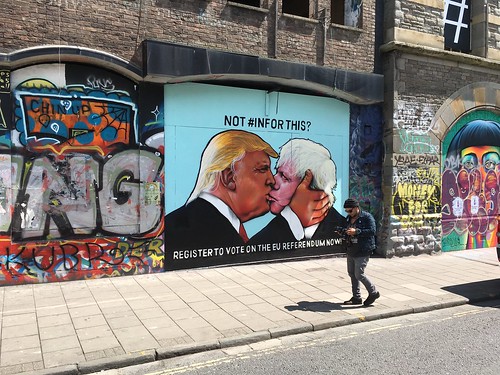
Boris meets Trump at Westmoreland House
A large proportion of the American population have just moved to the same country. For which I can issue a guarded "hello". I would say "welcome", except the country we've all moved to doesn't welcome outsiders —it views them with suspicion, especially if they are seen as different in any way. Language, religion and skin tone are the usual markers of "difference", but not sharing the same fear and hatred of others highlights you as a threat.

Because we have all moved from an apparently civilised country to one where it turns out half the people are the pitchfork waving barbarians who are happy to burn their opponents. That while we thought that humanity had put behind them the rallies for "the glorious leader" who blamed all their problems on the outsider —be it The Migrant, the Muslim, The Jew, The Mexican or some other folk demon, we hadn't; we'd just been waiting for glorious leaders that looked slightly better on colour TV.

Bristol Paintwork

One thing I've seen in the UK is that whenever something surfaces which shows how much of a trainwreck things will be (collapse in exchange rates, banks planning to move), the brexit advocates are unable to recognise or accept that they've made a mistake. Instead they blame: "the remainers", the press "talking down the country", the civil service "secretly working against brexit", the judicial system (same); disloyal companies. Being pro-EU is becoming as much a crime as being from the EU.

That's not going to go away: it's only gong to amplify as the consequences of brexit become apparent. Every time the Grand Plan stumbles, when bad news reaches the screens, someone will be needed to take the blame. And I know who it's going to be here in England —troublemakers like me.
We're sitting through a history book era. And not in a good way.

If there's one change from the past, forty years from now, PhD students studying the events, "the end of the consensus", "the burning of the elites", "the rise of the idiotocracies", or whatever it is called, they'll be using Facebook post archives and a snapshot of the twitter firehose dataset to model society. That is: unless people haven't gone back and deleted their posts/tweets to avoid being recorded as Enemies of the State

-Steve

ps: Happy Kristallnacht/Berliner Mauer Tag to all! If you are thinking of something to watch on television tonight, consider: The Lives of Others

2016-10-05

What shall we do with the Europeans in our midst?

Most of my family members are European. There: I said it. I have two German uncles. And a wife born in Nairobi, a son born in Oregon, a mother in Glasgow, a father in Ulster —a father who spent the last 20 years of his life living in France. I was born in Scotland, grew up in London, now living in Bristol. When I exercise my inherited right to an Irish passport, I shall officially remain an EU citizen, regardless of what happens in Britain.

We are all Europeans; a continent whose history of warfare is abysmal compared to the Chinese empire (before the UK started the Opium wars), Feudal Japan (before the US turned up and demanded access at gunpoint), North America (before the European colonists decided they wanted most of the land, and pretty much everywhere else. The reason Europe embraced guns, while China used gunpowder for fireworks is that one place was a stable area who liked to party, the other place a mess which liked to kill neighbours on account of: different religion. Different interpretation of the same religion. Speaking different language. Differences in which individual was considered ruler of the area.

The post-1945 EU project was an attempt to address this, by removing the barriers, boosting trade and mutual industry, making visiting the other countries easy, and making it easy to live in the other countries. Why does the latter matter? It was aimed at preventing the mass unemployment scenarios of the 1930s from developing again —or at least spreading the pain, so one country didn't get trapped in a downward economic spiral: the people weren't going to be trapped, awaiting a Glorious Leader to rescue them. Instead they could follow the jobs.

Britain 2016 is not Germany 1934.
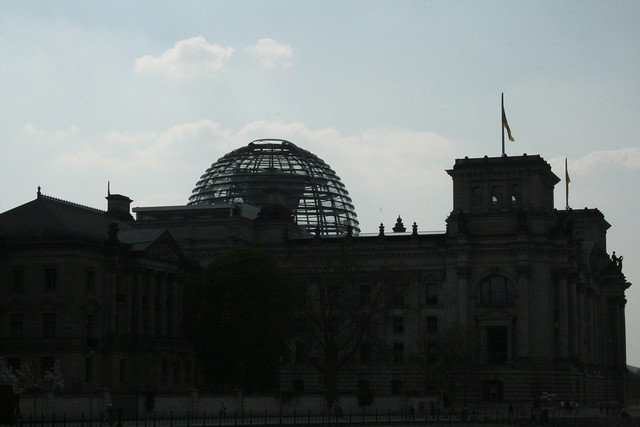
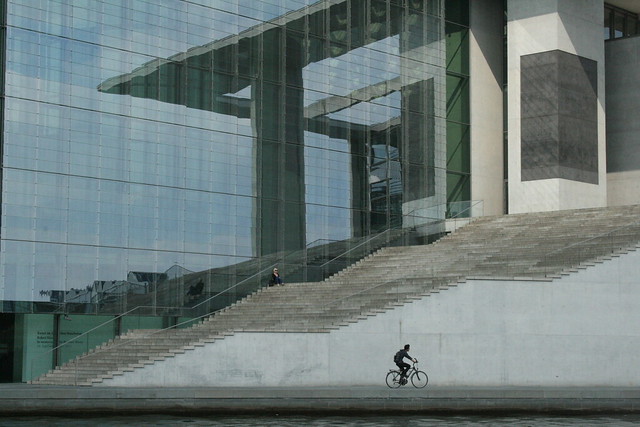
Berlin.

We haven't burned the books yet, though I wonder how long before the list of forbidden web sites starts to be a mandatory feature of home broadband links, rather than an optional item
Berlin

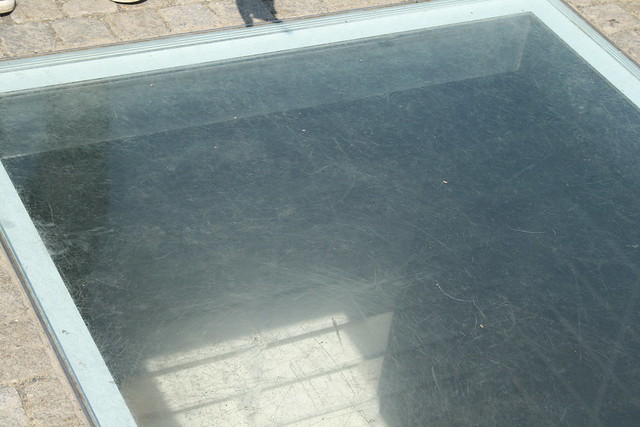
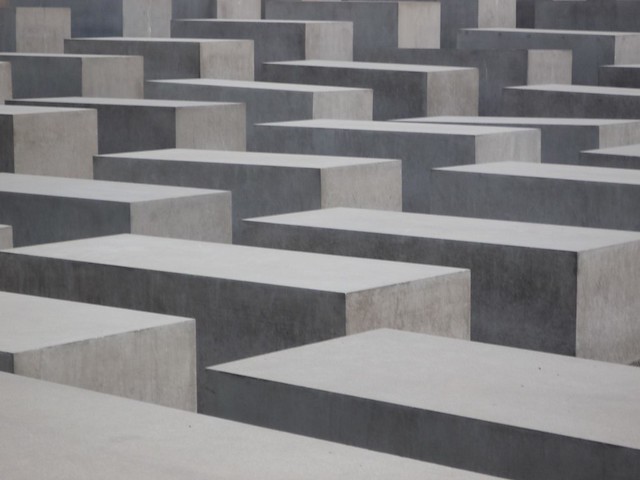
And, we are a long, long way from the memorials to the people killed by an oppressive state
Berlin Buzzwords

(though I note we don't own up to our history in Slavery; there's one slow-motion holocaust we pretend is nothing to do with us).

But: the hate is beginning, and I fear where it will lead.

Right now, if someone was asking for advice as to where in Europe to set up a small software startup, to hang round with like-minded hackers, to enjoy a lifestyle of which coding is in integral part, I'm going to say: Not London. Not Bristol. Berlin


P3130134

Britain has a party of hate in power. In four months we've gone from a referendum to being in/out the EU project, to one where politicians are proposing companies provide lists of who is "foreign"; where the Prime Minister are saying the National Health Service only needs staff and doctors from the rest of the continent "for an interim period".

All of a sudden we've gone from being one of the most diverse and welcoming countries in the continent to one where there's already an implicit message "don't buy a house here —you won't be staying that long."

Berlin

And what is the nominal opposition party doing? Are they standing up and condemning such atrocious nativist xenophobia? No, they are too busy in their internal bickering to look around, and when they do say things, its almost going along with it, believing they need to appear to be harsh on immigration, accepting of the Brexit referendum —as if that is needed for power, and that their getting re-elected is more important than preventing what the conservative party is trying to do. Where are the protests? The "we are all European" demonstrations? Because I'd be there. As it is, we have Nicola Sturgeon of the Scottish Nationalist Party being the sole mainstream politician to denounce this.

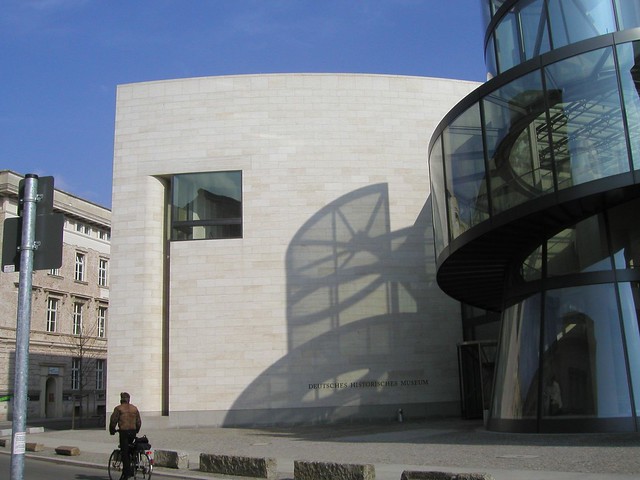
Berlin Buzzwords

Does anyone really think things would stop at collecting lists of "foreigners"? Or will that just legitimise the growing number of racist hate crimes which have started up after the Brexit referendum; crimes that have got as far as murder. It is only going to make things worse, and in the absence of a functional opposition, there is nothing to stop this.

I don't know how my friends and colleagues from the rest of Europe feel about this —I haven't spoken to any this morning. But I know this: I don't feel at home in this country any more.

2016-07-17

Travels abroad

Early in July I did a bike ride with many other parents from Alexander's primary school; bikes loaded into a truck and driven down to Bergerac, us flying out to the airport, then riding south at 60-100 miles/day, ending up in San Sebastian, Spain, skirting the pyrenees carefully.


Here's me, at the Atlantic coast, June 2006.


CCCC2016


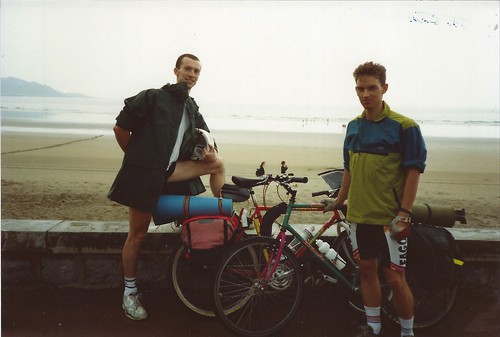
This was the first time I'd been at the French/Spanish border of Hendaye/Irun for 26 years. Then we loaded the bikes onto a train in London, then three days later a train+ferry+overnight train to get to Hendaye station, again getting on our bikes at the Atlantic seaside —this time, August 1990.

1990-pyrenees-1

As usual, not the combined weight of rider+bike+luggage is constant, even though now the bike is a Ti+Carbon CX machine, and then it was a steel MTB with panniers full of camping equipment and a change of clothes. (*)

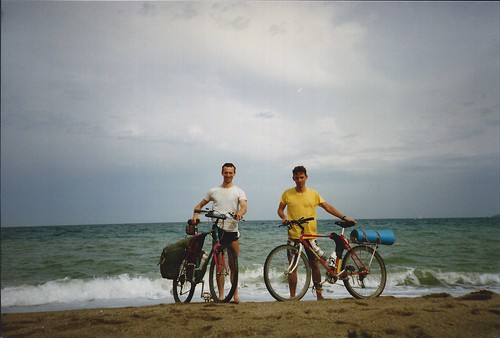
Two weeks later, after zig-zagging up the highest roads in the Pyrenees, wobbling in and out of France and Span, we got to the Mediterranean Sea, somewhat the worse for wear.
1990-pyrenees-38

Return journey: similar, preload the bikes, overnight train to paris, onboard to London, pickup the bikes and then further trains west. 24+ hours, at least.


In 1990, that was a major expedition. I got a credit card for the first time, changed money into FFr and Spanish Pesetas, took some travellers checks to change money as went down. Maps: paper things hooked onto the handlebars. Camera: my first 35mm autofocus Canon compact camera. It had a little self timer, hence the various staged team-selfie pics. The bikes were generations behind what I have now, as were: The lights, the camping kit, much of the clothing. Communications: postcards.

This time, it's not a expedition, it's just a week on the mainland. Money? Euros left over from my June trip to Berlin, topping up at ATMs. Camera? on the phone plus a compact digital camera with proper zoom lens. Maps: Garmin GPS and offline google maps. Communications: phone with free phone and data roaming round Europe. Luggage: cards, a bag full of chargers and miscellaneous electronics. Riders: much, much worse. If I'd had Strava then, today's numbers would be so bad I'd give up in despair.

And now: not a multi-train expedition, a quick holiday from the local airport, followed by a few days in San Sebastian and Bilbao, back home from another direct flight, home in two hours, then driving over to Portsmouth to collect a child: a low effort, low stress day. It took as long to drive to Portsmouth as it did from our Bilbao hotel to our Bristol house.


This was not a trip to foreign lands where money is different, where a passport is needed to be handy as you cross the borders, where things are exotic. We are in Europe now, and have moved on from the neighbouring countries being far, far, away.

Except now: things have changed. The rate of decay of the UKP:EUR exchange rate meant that we had to run to the ATMs, fearing that the rate would be worse if waited 24h. Where today, we could roam freely as part of a continent, the decisions of fellow UK voters means that we're taking a step backwards as a nation.

While that exoticness 26 years ago made for more of a wilder expedition, we have gained so much. Yet now Britain is turning its back on it in exchange for a social and economic fiasco. It's going to be a disaster, and when that happens, the people to blame: the paper proprietors, the politicians who lied —they'll get away with it. The country will suffer, worse of all those people in the forgotten towns who believed the lies. Well: they voted for it —their fault. If need be, I can walk away from the country, over to the continent which I consider myself a full citizen of.

(*) We had a regime of wash the previous day's clothes in the morning, hang to dry on the bike, wear the fresh stuff in the evening and again on the following day's ride. It worked, though on dusty days things got a bit gritty.

2016-06-27

A Small Divided Island on the Edge of Europe

Berlin 2016

One of the things we got to do we moved back from the US to the UK was to introduce our 3 year old son to his inheritance: Europe. The first trip: a flight to Nice, stay in Antibes, the town on the Cote D'Azur where my father lived for the last 30+ years of his life, where I used to go for holidays in my late teens, my first experience of spending time in France. We drove to Grenoble, stayed with some UK friends who had moved to work there, attended a wedding between an Italian friend and former colleague, now also resident in Grenoble, and UK Army officer, stationed in Germany.

Later that year, the full road trip: Eurotunnel to France, overnighting in Namur, Belgium. Then down through Luxembourg and on to Germany, ending up south of Munich -two countries a day. Staying with an Irish & German couple, again, friends from Bristol. Introducing Alexander to the German lifestyle, heading into Austria for his first Alpine hut experience. Other holidays, other places: Italy, Berlin, Amsterdam. He, like us, had the whole of Europe waiting for him when he grew up.

And now? The UK has voted to put a wall between itself and the rest of the continent. A lot of the voters think they will are putting a wall up to keep people out. Maybe but the consequence is a wall keep the children in.

For people struggling to survive in the bits of the country where the heavy industry used to be, that's not exactly something that matters to them. Competition for minimum wage, zero hour jobs, the repeated message that "it's all the fault of Europe", you can't fault them. When your life is fucked -you've got nothing to lose. Unfortunately for them: this isn't going to solve their problems. They were lied to by politicians who knew they were being dishonest and by papers that told them Brexit was the answer. Wherein lies a danger: if a manifesto of xenophobia and cutting yourself from your trading partners doesn't deliver, what's the next policy action going to be? My fear: ramping up the hate.

It doesn't bode well for the UK, and it's a warning for the US: hate, fear and unrealistic promises can attract to voters who feel forgotten by what appears a distant political group unconcerned with the problems of vast swathes of a country. 

B. and I are off to France & Spain for a cycling holiday next Saturday. Our son will be staying with his (Scottish) grandmother in Portsmouth, on the South Coast of England. Where before he could look out from the seashore and see a continent waiting for him, now the only thing he'll see waiting for him out there is the Isle of Wight.


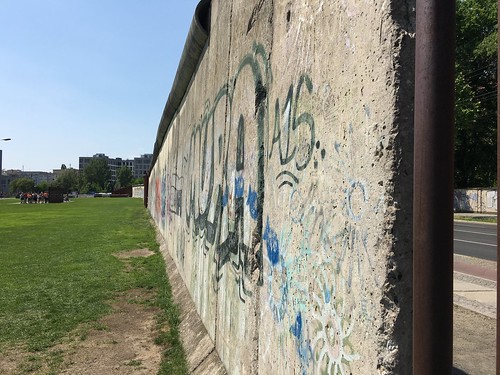
[Photo: Berlin Wall, June 2016]

2016-06-20

Toxic Ideas

Whenever I walk down to the Pop-up Patisserie on Stokes Croft to buy my Pain-aux-Amandes for drinking with my morning Illy Coffee, I cross a lovely little square on the King's Down, above Nine Tree Hill,

Kingsdown

This lovely square is actually a war grave. A thirteen gun fort was built there during the English Civil War, a fort captured by the Royalists in 1643. in 1645 it fell to Cromwell's New Model Army —and everyone in the fort killed.


Looking at the genteel civility of these georgian houses built 150 years after the war, it's hard to conceive of what happened here, but it did.

That is: by the end of the Civil War, people in the country side were prepared to kill fellow citizens "without quarter". No expansionist battle for territory between cultures, language speakers, or the like. Simply, initially, differing beliefs —going from abstract details to executions in under five years.


Perhaps the ideas were so fundamentally incompatible that yes, killing the holders of the conflicting beliefs was the only possible way to have peace in the land —the civil war being thus the conflict between ideas instantiated. Or what was an initially a metaphorical battle over the notion of sovereignty at the level of Parliament and the King, created a conflict which resulted in a war where soldiers on the ground were told what they were fighting for in terms they could understand and kill for —even if bore no relation to those root cause.

Which brings me to the present day.

UKIP are not the National Socialist German Workers’ Party. Farage doesn't appear to have any leanings towards fasicm(*). He's just a racist populist who complains about being picked on when everyone denounces his poster which was "unfortunate" to come out the day an elected MP —something Farage has never achieved, despite many attempts— was killed by someone far to the right of UKIP. That alleged killer is unlikely to have been directly radicalized by the runup to the #Brexit vote —though one must suspect, he wouldn't have been voting for remain.

Because what the Leave campaigns have come down to, in the end, is anti-European racism: it is for Brexit what anti-Scots advertising was the conservative party in the 2015 UK elections. Except the Brexit message is coming at the end of months and months —years, even of press hate directed at "migrants" and "refugees", "swarms of them". That's where the hate has been nurtured: not in a few weeks in the summer of 2016, nor even in a poster which was appalling enough before what took place later that day. It's in the front pages of the Daily Mail and the Daily Express every morning. When I nip round to my local shop to buy a baguette, I have to struggle to avoid making eye contact with some half-page-height headline text above a photo, text invariably starting with "MIGRANTS", or, failing that, MUSLIMS

That's what's closest to Nazism: the relentless selling of hate against a group of people. Here though, possibly more for profit than any ideology.

Yet that hate they sell seeps in the minds of people —that's what would have radicalized the alleged killer. The Daily Mail.

And what the Vote Leave campaign has done is legitimised that hate: made it OK. And irrespective of the outcome of the referendum, it's going to remain.

If Britain votes to leave, post-whatever economic shocks hit our economy and exchange rate, while the negotiations go on with the EU about how we should still be friends, all those people worked up into a hate of the foreigner will be demanding they get what they were promised. It's going to be fundamentally unpleasant for anyone considered "not one of us". I don't know whether me and my family meet that criteria: I do know I'd be exercising my ancestral right to an Irish passport later on in June, not just for me —but for my son. Because I'm don't know if a joint UK/US citizen of Irish/Scottish/Gujarati descent would be on the UKIP approved list —or if he wants to live in a country where UKIP has influence. And while that US passport gives him one exit option —things don't look good there either.

If, as I hope happens, Britain votes to stay in the EU, all that stirred up hate will remain.

Assuming it's a close vote, the losers aren't going to say "oh, well, never mind" —there's going to be a lot of angry resentment. And the "remain" coalition have helped stoke up that anger and resentment, with their dire predictions of doom and devastation. Disappointed Leave voters and activists are going to feel their victory was stolen, and are unlikely to go away. Perhaps hopefully, Farage himself will —and then be forever remembered for "that poster"; his rivers of bloodˆ epitath.

Those in the Conservative Party may form a majority of MPs, as well as members —they aren't going to away: expect a coup attempt later on in the year, with Boris waiting to graciously accept the crown.

And the rest of the nation? Those papers are going to keep churning out their hate, now with "if only they'd listen", and "we warned you" accompanying each article of lies, exaggeration and hate. People are going to keep reading them —and keep getting angry.

Whatever happens, it's not going to be pleasant.

(*) Do note, however, that his mock attempt to resign as leader of the party and it's refusal to be accepted by the party does mimic that of Hitler's threat to resign in 1921 from the then-nascent NZ party. (The Rise and Fall of the Third Reich, Shirer, 1961, Chapter 2).

[Photo, Freemantle Square, Kingsdown, Site of Prior's Fort, 1642-1645; a small plaque in the centre of the green remembers the dead. Nine-tree hill got its name at the time, as did the nearby Cromwell Road].
2013-11-10

Foreign News

The cracks all the way to the top of the small feudal island-state of Great Britain became visible this week, as a show trial and exposure of police and state security activities exposed the means the regime retains power.

Stokes Croft Royal Wedding Day

For centuries Britain has endured a caste system, where those at the bottom had little education or career prospects, while those in the ruling "upper class" lived an entirely separate life -a life that began with a segregated education from their school, "eton", to their universities, oxford and cambridge and then employment in "the city" or political power in "parliament". Similar to the French Polytechniques system, while it guarantees uniformity and consistency amongst the hereditary rulers, the lack of diversity reduces adaptability. Thus the elite of this island have had trouble leading it out of the crises that have befallen it since 2008 -when it became clear that it offshore tax-haven financial system had outgrown the rest of the country. The emergency measures taken after the near-collapse of the countries economy have worsened the lives for all outside a small elite -exacerbating the risks of instability.

This month some of the curtains on the inner dealings of that ruling oligarchy were lifted, giving the rest of the country a glimpse into the corrupt life of the few. A show trial of the editors of a newspaper showed how the media channels -owned by a few offshore corporations- were granted free reign by the rulers, in exchange for providing the politicians with their support and the repetition of a message that placed the blame for the economic woes on the previous administration and outgroups such as asylum seekers and "welfare scroungers".

A disclosure of how the media were creating stories based on intercepting the voicemail messages of anyone of interest forced the government to hand a few of the guilty to the legal system -while hoping that the intiminate relationship between these newspaper editors and those in government do not get emphasised. Even so, this scandal has already forced the government to postpone approving a transaction that would give a single foreign oligarch, Murdoch, near absolute control of television and the press. Public clamour for some form of regulation of the press has also forced the regime to -reluctantly- add some statuatory limitations to their actions. It remains to be see what effect this has -and whether the press will exact their revenge on the country's rulers.

A few miles away, in the country's "parliament", the MPs exercised some of their few remaining privileges of oversight. The "plebgate" affair represented a case in which the feared police, "the Met" were grilled over their actions. Normally the Met is given a free hand to suppress dissent and ensure stability across the lower castes, but in "plebgate" the police were caught on CCTV and audio recordings making false accusations about one of the rulers. The thought that "the Met" could turn on their masters clearly terrifies them: the grilling of the police chiefs represents the public part of a power struggle to define who exactly is in charge.

Alongside this, the heads of the state security apparatus were interviewed over the increasingly embarrasing revelations that they had been intercept the electronic communications of the populace of the country, "the subjects" as they are known. This comes as no surprise to the rulers, who recognise that with the mainstream media being part of the oligarchy, any form of organised dissent will be online. Monitoring of facebook and google is part of this -during the 2011 civil unrest, calls even were made by the press and politicians to disable some of these communications channels. Again, the rulers have to walk a fine line between appearing concerned about these revelations, while avoiding worsening those relationships which are critical for keeping the small hereditary elite in power.

Given the interdepencencies between the rulers, the press and the state security forces, no doubt these cracks will soon be painted over. Even so, irrespective of the public facade, it may be a while before the different parts of what is termed "the establishment" trust each other again.

2011-11-01

Lost in time

I've been following the Occupy London debacle. And it is disaster, a PR mess for the City of London and the Church of England.

One thing about the UK is there are lots of historical things about. The castles, the iron-age hill forts, the straight roads build by the romans, the town names derived from latin. Some retain their grandeur, but have (somewhat) moved on with the times, like here: Oxford, whose curricular has been upgraded for new ideas (calculus), and whose buildings are now tourist attractions as well as a place of learning.
Oxford Colleges

Then there's the City of London. I've cycled through it a few times at the weekend: empty. Boring. Almost nobody lives there. What's interesting is the last fortnight has show how much of a relic of middle ages it is, how much power it has -and, therefore, how much power the business based there have.

The key points are
  • It has special rights w.r.t parliament and "the crown", including lobbying powers in parliament -a parliament which it considers itself mostly exempt from.
  • It's electorate is derived not just from the citizens, but from businesses and organisations based in the City. The citizens have the minority vote.
  • The process for becoming leader of the city is some process that doesn't even pretend to be democratic.
What it means today is this: the part of Britain which contains the headquarters of the most powerful business in the city is effectively self-governed by those business, and independent from the rest of the country.
Night Chill

Which is funny, as the People's Republic of Stokes Croft has taken up that "Passport to Pimlico" theme of an independent state within a city. They just do it as joke. Well, the joke is on them.